
When your bakery processes 200+ croissants daily, hand-rolling dough becomes the production bottleneck. Your team spends hours achieving inconsistent thickness, lamination quality varies batch to batch, and labor costs consume profit margins. This scenario plays out across commercial kitchens worldwide—from artisan bakeries to high-volume pizzerias. Dough sheeters transform this challenge into competitive advantage by automating the most labor-intensive step in pastry production while delivering precision that human hands cannot match consistently.
Primary Commercial Applications of Dough Sheeters
Dough sheeters serve as specialized production equipment designed to flatten dough into uniform sheets with precise thickness control. Commercial operations deploy these machines across multiple product categories, each requiring specific thickness tolerances and production speeds.
Laminated Pastry Production
Professional bakeries use dough sheeters to create the delicate layers essential for croissants, Danish pastries, and puff pastry. The machine compresses dough and butter into sheets ranging from 2.5 to 4.5 millimeters thick, maintaining the temperature control critical for proper lamination. A standard countertop unit processes 15-20 kilograms per hour, enabling bakeries to produce 150-200 croissants during morning prep shifts.
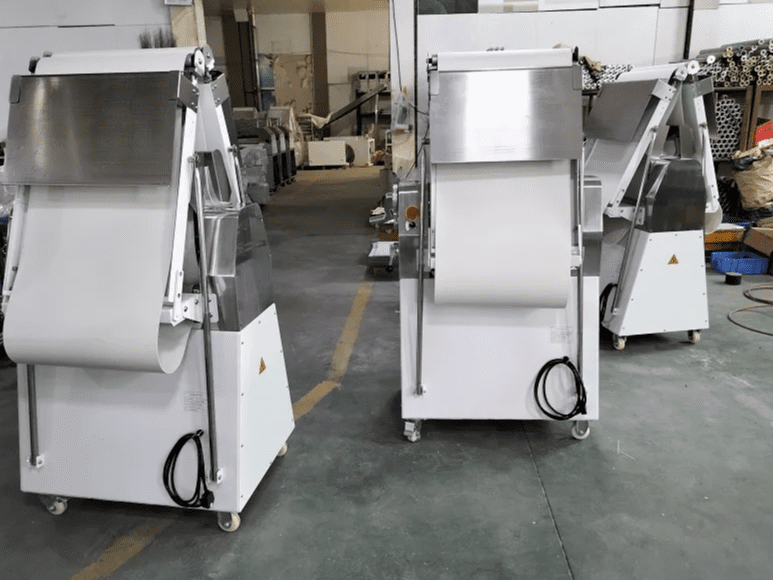
The sheeting process develops gluten structure through controlled compression rather than aggressive rolling. This mechanical action creates more uniform layers compared to manual techniques, resulting in consistent rise and flakiness across entire production runs. Artisan bakeries report 30-40% time savings during lamination workflows while achieving superior layer definition.
Pizza Dough Sheet Formation
Pizzerias leverage dough sheeters to create perfectly round, uniformly thick pizza bases at production speeds reaching 250-300 pieces per hour. The equipment handles dough balls ranging from 200 grams for personal pizzas to 500 grams for family-size pies, rolling each to specifications between 3-6 millimeters thick depending on crust style.
For thin-crust and cracker-crust varieties, dough sheeters provide the mechanical pressure necessary to achieve sub-3-millimeter thickness without tearing. The rollers press out gas pockets while strengthening the gluten network, producing bases that bake more evenly and develop crispier textures. Operators adjust roller gaps via digital controls or manual knobs, switching between thickness settings in seconds as orders flow through production queues.
Pie Crust and Tart Shell Manufacturing
Commercial bakeries producing high volumes of pie crusts and tart shells rely on dough sheeters to maintain consistent thickness across hundreds of units daily. The equipment rolls tender pastry doughs to precise specifications—typically 3-4 millimeters for standard pie crusts and 2-3 millimeters for delicate tart shells.
Production efficiency increases dramatically when sheeting replaces hand-rolling: a skilled operator using a floor-standing model can process dough for 80-100 pie crusts per hour, compared to 15-20 crusts via manual methods. The uniform thickness ensures consistent baking times and prevents the common quality issues of thick centers or thin edges that plague hand-rolled crusts.
Flatbread and Specialty Dough Applications
Beyond pastry and pizza, dough sheeters handle diverse flatbread categories including tortillas, pita, naan, and focaccia. These applications typically require thickness settings between 2-8 millimeters, with the equipment’s adjustable rollers accommodating the varying hydration levels and gluten structures of different flour blends.
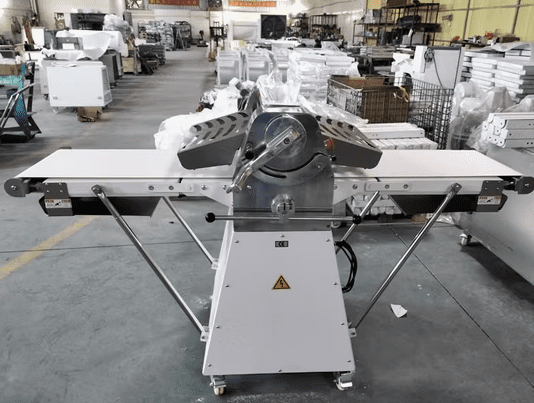
Wet, sticky dough formulations like ciabatta—notoriously difficult to handle manually—pass through properly configured sheeters with scrapers that prevent adhesion to rollers. Professional operations report that sheeting equipment can handle dough with hydration levels up to 80%, expanding production capabilities to include artisan styles previously limited to small-batch hand-shaping.
How Dough Sheeters Transform Production Efficiency
Understanding the operational impact of sheeting equipment requires examining the specific performance metrics that drive return on investment in commercial baking environments.
Consistency and Quality Standardization
Precision thickness control eliminates the variable human factor from dough preparation. Commercial dough sheeters maintain tolerance ranges of ±0.5 millimeters across entire sheets, ensuring uniform baking behavior and appearance. This consistency translates directly to reduced waste from over-thick or over-thin sections that bake improperly.
The equipment’s uniform pressure application also develops dough structure more predictably than manual rolling. Gluten networks align consistently, creating products with reproducible texture characteristics. Bakeries using sheeters report 15-25% reduction in batch-to-batch quality variation, a critical factor for operations with multiple locations requiring brand consistency.
Labor Cost Reduction and Productivity
Time-motion studies demonstrate that dough sheeters reduce labor requirements by 60-75% for pastry lamination tasks. A skilled baker manually laminating croissant dough requires 45-60 minutes to complete a 10-kilogram batch through multiple folds. An electric dough sheeter completes the same task in 12-15 minutes, freeing the baker for higher-value activities like finishing and decoration.
The productivity gains compound across product categories. A pizzeria processing 200 daily orders can reduce dough prep staff from three workers to one by implementing a sheeter system, representing monthly labor savings of $4,000-$6,000 in typical urban markets. These savings typically achieve equipment payback within 8-12 months for medium-volume operations.
Production Capacity Scaling
Floor-standing dough sheeters with 500-700 millimeter belt widths enable bakeries to scale output without proportional staff increases. A single operator managing a reversible sheeter can maintain production flows of 40-50 kilograms per hour—equivalent to the output of three skilled manual rollers working simultaneously.
This capacity expansion proves particularly valuable during peak demand periods. Bakeries report that sheeting equipment allows them to fulfill holiday orders requiring 3-5× normal production volumes without hiring temporary staff or extending shifts beyond sustainable working hours.
Equipment Integration in Commercial Baking Operations
Dough sheeters function as part of integrated production systems rather than standalone units. Understanding how they complement other bakery equipment optimizes workflow design and capital allocation.
Coordination with Mixing Equipment
The upstream relationship between mixers and sheeters directly impacts production flow. Stand food mixer units and planetary mixers prepare dough to optimal consistency for sheeting—typically targeting development just short of final gluten formation. The sheeter then completes development through its compression action.
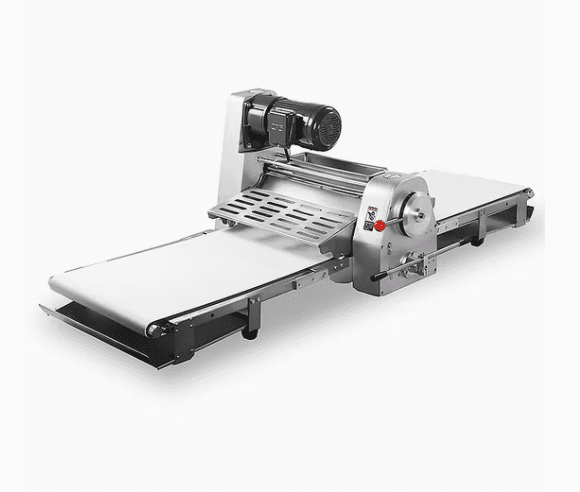
Production scheduling coordinates mixer batch sizes with sheeter capacity. A 20-quart planetary mixer producing 8-kilogram dough batches pairs efficiently with countertop sheeters processing 15-20 kilograms per hour, maintaining continuous flow without bottlenecks. Larger operations deploy spiral mixers generating 40-60 kilogram batches that feed directly to floor-standing sheeters with matching throughput capacity.
For operations already equipped with food mixers for baking or industrial mixers for other applications, adding a dough sheeter creates synergistic efficiency gains. The mixer provides consistent dough quality while the sheeter standardizes forming operations—eliminating the two primary sources of product variation in manual systems.
Relationship to Alternative Rolling Equipment
The distinction between sheeters and simpler rolling equipment affects equipment selection decisions. A pizza dough roller machine typically features a single roller pair processing dough in one direction, suitable for quick-service operations prioritizing speed over precision. Pastry roller equipment offers basic thickness adjustment but lacks the multiple passes and temperature control essential for laminated doughs.
Dough sheeters provide reversible operation with conveyor belts that allow multiple passes through adjustable roller gaps. This capability proves essential for lamination workflows requiring precise thickness reduction across sequential folds. The additional complexity and cost—countertop sheeters range from $900-$3,000 while simple rollers cost $300-$800—justifies itself in operations where pastry quality directly impacts revenue.
Mixer cooking applications and meat processing operations sometimes evaluate sheeters for specialized forming tasks. While the equipment technically handles non-dough materials, dedicated sheeters for pastry production should remain separate from systems processing savory applications to prevent flavor cross-contamination.
Selection Criteria for Commercial Dough Sheeters
Purchasing decisions should align equipment specifications with production requirements, space constraints, and budget parameters specific to each operation.
Capacity Matching to Production Volume
Right-sizing equipment begins with calculating daily dough throughput. Small artisan bakeries producing 50-100 pastries daily find manual or countertop electric sheeters with 12-18 inch roller widths sufficient. Medium operations handling 200-500 units require countertop models with 18-20 inch capacity or compact floor-standing units.
High-volume operations—pizzerias processing 500+ pies daily or wholesale bakeries supplying multiple retail locations—need floor-standing sheeters with 24-30 inch belts capable of 60-80 kilogram hourly throughput. These units occupy 6-8 feet of linear space but eliminate production bottlenecks that would otherwise require multiple smaller machines and operators.
Seasonal demand fluctuations influence sizing decisions. Operations experiencing 200-300% volume spikes during holidays should size equipment for peak requirements rather than average demand, accepting lower utilization during normal periods as the cost of meeting high-season revenue opportunities.
Manual versus Electric Operation
Manual dough sheeters require hand-crank operation, offering advantages in equipment cost ($200-$600), portability, and operation without electrical power. These models suit home-based bakeries, farmers market vendors, and operations with limited electrical capacity or budget constraints. However, they demand continuous operator attention and limit throughput to the pace of manual cranking—typically 8-12 kilograms per hour.
Electric models ($800-$4,000 for countertops, $5,000-$15,000 for floor units) automate roller movement, allowing operators to feed dough continuously while monitoring quality. The productivity gain justifies the investment for operations processing more than 20-25 kilograms daily. Electric units also provide consistent roller speed regardless of operator fatigue, improving thickness uniformity across extended production runs.
Semi-automatic configurations offer middle-ground options with motorized roller movement but manual dough feeding and folding. These designs suit operations transitioning from manual methods who want productivity improvements without full automation investment.
Space and Installation Requirements
Countertop sheeters require 24-40 inches of linear counter space plus adequate depth (12-18 inches) and overhead clearance for manual crank operation. These units suit kitchens with limited floor space but available prep counter surfaces. Installation typically involves only clamping the unit to counter edges—no electrical or plumbing connections required for manual models.
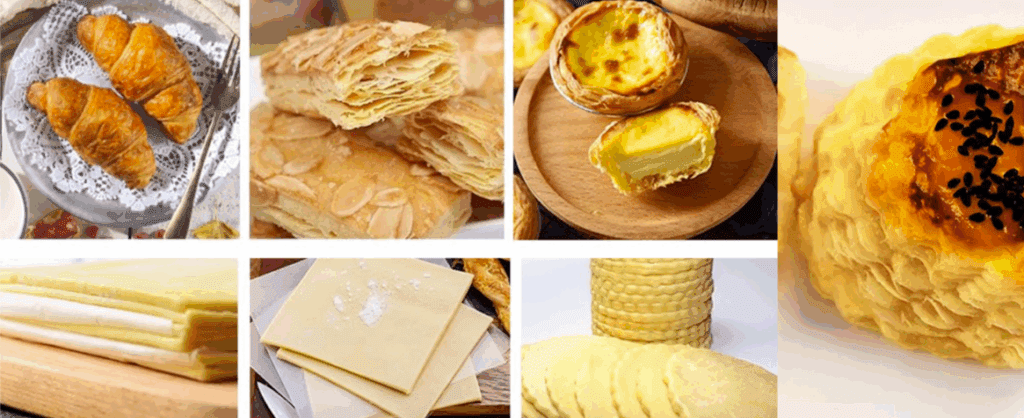
Floor-standing units demand dedicated floor space of 4-8 feet in length plus side clearances for belt access and maintenance. Electrical requirements range from standard 120V/15A circuits for smaller models to 208-240V/20-30A circuits for industrial units. Ventilation considerations matter less than with ovens, but heat dissipation from continuous motor operation requires adequate air circulation.
Mobile units with caster wheels offer flexibility for operations needing to relocate equipment for cleaning or reorganize layouts seasonally. The mobility feature adds $200-$400 to equipment cost but proves valuable in multi-use kitchens serving both retail and catering functions.
Maintenance and Operating Cost Factors
Ongoing operational expenses include roller resurfacing every 2-4 years ($200-$500), belt replacement every 1-2 years ($150-$400), and routine bearing lubrication. Well-maintained sheeters deliver 10-15 years of productive service, but neglected units require premature replacement at 5-7 years.
Cleaning labor represents significant ongoing cost—sheeters require 15-20 minutes of breakdown and cleaning after each production session to prevent flour buildup and dough residue issues. Operations should budget 10-12 hours monthly for thorough cleaning and preventive maintenance tasks. Food-grade lubricants ($15-$30 per bottle) and cleaning compounds ($40-$60 annually) add minor recurring expenses.
Energy costs for electric models remain modest—1-2 kilowatt-hours per day for typical bakery usage patterns, translating to $5-$15 monthly at average commercial electricity rates. The energy impact of sheeting equipment ranks well below ovens, proof boxes, and refrigeration systems in overall utility consumption.
Frequently Asked Questions
Can dough sheeters handle all types of dough formulations?
Commercial dough sheeters accommodate most bread, pastry, and pizza dough formulations with hydration levels between 50-80%. They excel with laminated doughs, pie crusts, pizza doughs, and standard bread formulations. Very sticky high-hydration doughs above 80% may require special roller coatings or dusting strategies. Extremely low-hydration doughs under 45% can stress roller mechanisms and may benefit from pre-hydration resting periods.
What thickness range can professional dough sheeters achieve?
Most commercial units offer adjustable gaps from 0.5 millimeters to 15-20 millimeters. Pastry applications typically use 2-5 millimeter settings, pizza dough requires 3-6 millimeters, and pie crusts target 3-4 millimeters. Manual sheeters provide 10-15 discrete thickness settings via adjustment knobs, while digital models offer continuous adjustment with precision displays. The practical lower limit for laminated doughs remains around 2 millimeters to preserve layer structure.
How does sheeting compare to hand-rolling for product quality?
Dough sheeters deliver superior consistency compared to manual rolling—thickness variation reduces from ±2-3 millimeters hand-rolled to ±0.5 millimeters machine-sheeted. The uniform pressure application develops gluten structure more evenly, producing consistent texture across batches. However, hand-rolling offers advantages for rustic products where irregular thickness contributes to artisan character. Many operations use sheeters for base processing then finish products with hand-shaping for aesthetic appeal.
What production volume justifies dough sheeter investment?
Return on investment analysis suggests bakeries producing more than 50-75 laminated pastries daily or pizzerias handling 100+ pies daily reach payback within 12-18 months. The calculation factors labor savings ($15-$25 per hour eliminated), waste reduction (3-5% of ingredient cost), and capacity expansion enabling revenue growth. Smaller operations benefit from used equipment or entry-level manual models while building volume toward automated systems.
Do food safety regulations require specific sheeter features?
Commercial food preparation regulations mandate food-contact surfaces constructed from stainless steel or approved food-grade materials. Roller surfaces must be smooth, non-porous, and cleanable to sanitation standards. Some jurisdictions require NSF certification for all food-processing equipment. Bakeries should verify local health department requirements before purchasing, as specifications vary by region. Most major commercial brands design equipment to meet broad regulatory standards.
Can existing bakery equipment integrate with new dough sheeters?
Modern dough sheeters integrate effectively with established production workflows. The primary coordination involves matching mixer output capacity with sheeter throughput—generally targeting 1:1 or 1:1.5 ratios to prevent bottlenecks. Sheeters require minimal utility connections (standard electrical service) and fit into existing layout configurations with proper spatial planning. Operations can phase in sheeting equipment while maintaining manual backup processes during the transition period.
Key Takeaways
- Dough sheeters automate the most labor-intensive aspects of pastry production, reducing processing time by 60-75% while delivering thickness precision within ±0.5 millimeters
- Commercial applications span laminated pastries, pizza dough, pie crusts, and specialty flatbreads, with production capacity ranging from 15 kilograms per hour for countertop units to 80+ kilograms for floor-standing systems
- Equipment integration with existing mixers and production workflows creates efficiency synergies that compound productivity gains beyond individual equipment capabilities
- Investment justification centers on labor cost reduction, waste minimization, and capacity expansion that enable revenue growth without proportional staff increases
- Selection criteria should prioritize production volume alignment, space constraints, and total cost of ownership including maintenance requirements and energy consumption
References
- Rademaker BV – Commercial dough sheeting technology development and industrial applications – https://www.rademaker.com/
- Doyon Equipment – DL Series commercial dough sheeter specifications and production capacity data – https://doyonbaking.com/product/dl-series/
- Pro Restaurant Equipment – Operational benefits and time-motion analysis of commercial dough sheeters – https://www.prorestaurantequipment.com/blog/the-benefits-of-a-dough-sheeter/
- Wikipedia – Dough sheeting process mechanics and industrial bakery applications – https://en.wikipedia.org/wiki/Dough_sheeting
- Zanduco Restaurant Equipment – Commercial dough sheeter buying guide and equipment specifications – https://www.zanduco.com/us/resources-and-articles/a-complete-guide-to-dough-sheeters-.html
- CKitchen – Maintenance protocols and cleaning procedures for commercial dough processing equipment – https://www.ckitchen.com/blog/2023/8/how-to-clean-dough-sheeter.html
Internal Link Opportunities
- “planetary mixers” (first mention in H2-4) → Link to planetary mixer product category or buying guide
- “food mixers for baking” (mention in equipment integration section) → Link to commercial mixing equipment overview


