
Introduction
With continuous growth of global fresh food retail, prepared meat products and frozen sausage industry, plus continuously tightened food safety regulations worldwide, procurement managers of butcher shops, supermarket chains, central kitchens and sausage processing factories are confronted with widespread challenges.
Separately purchasing bone saws, meat grinders, meat slicers and sausage stuffers often creates mismatched capacity, inconsistent machine specifications and disconnected workflows. Manual raw meat transfer raises risks of cross-contamination, violating modern food hygiene standards. Mixed equipment with different operation rules makes consistent production hard to control. Scattered after-sales suppliers lead to lengthy downtime and delayed orders once machines break down.
Meanwhile, two major industry trends emerge: Firstly, overseas markets impose stricter requirements on food-grade materials and machinery safety certification (CE) for meat processing machinery. Secondly, small & medium meat manufacturers accelerate automation upgrades, phasing out fully manual work to cut labor costs and stabilize product quality.
Henzwell full-set commercial meat preprocessing production line covers the complete workflow: frozen bone cutting → fresh meat slicing → meat grinding → sausage & meat paste stuffing. We deliver 3 standardized line packages for independent butcher shops, medium supermarket central kitchens and large-scale meat processing factories. All individual machines are independently manufactured in our factory, with matched production capacity, unified voltage options and integrated after-sales service. This article explains production workflow structure, machine positioning, 3 sets of standard turnkey solutions, purchasing guide, equipment maintenance, industry compliance trends and real customer cases. It supports buyers to build suitable meat processing lines with systematic thinking and avoid hidden losses caused by scattered equipment procurement.
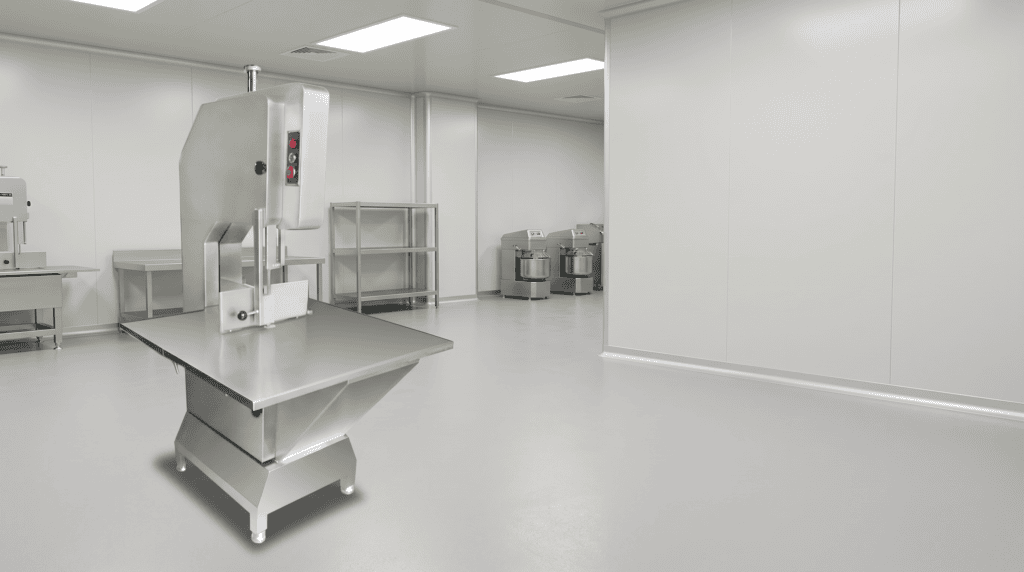
Complete Workflow of Meat Preprocessing Line
The complete front-end meat preprocessing line consists of 4 sequentially connected core stages, minimizing raw meat handling and transfer:
- Frozen Bone & Bone-In Meat Cutting Stage: Portion frozen beef bones, lamb ribs and whole frozen meat blocks
Matching Machine: Bone Saw Machine - Precision Fresh Meat Slicing Stage: Uniform slicing for beef rolls, lamb rolls, cooked meat and ham
Matching Machine: Commercial Meat Slicer - Meat Grinding Stage: Grind fresh/frozen meat into mince for meatballs, dumpling filling and sausage base
Matching Machine: Commercial Meat Grinder - Meat Product Stuffing & Forming Stage: Fill meat paste into casings to produce various sausages, frankfurters and smoked sausages
Matching Machine: Electric Sausage Stuffer
Workflow Logic: Frozen bone-in meat is cut into small blocks by bone saw → fresh raw material goes into slicer for sheet production; smaller meat chunks are sent to meat grinder to produce mince → minced meat transfers to sausage stuffer for casing filling. Businesses can adjust machine combinations based on main products: fresh butcher shops mainly deploy bone saw + meat slicer; sausage factories adopt the full set of 4-stage equipment.
Core Machine Introduction & Line Positioning
- Bone Saw Machine
Line Position: The first upstream stage of the whole meat line, essential equipment for cutting frozen bones and hard bone-in meat.
Application Scenarios: Butcher shops, hot pot ingredient factories, beef & lamb cutting workshops, processing ribs, marrow bones and frozen whole leg bones.
Key Advantages: Food-grade stainless steel construction, reinforced frame for stable operation; fixed tabletop or wheeled mobile versions available for easy relocation and cleaning; equipped with emergency stop and anti-pinch safety protection. Supports 220V/380V power supply, multiple cutting width options for different processing volumes.
- Commercial Meat Slicer
Line Position: Core forming equipment for fresh retail and hot pot ingredients, producing evenly sliced meat.
Application Scenarios: Beef & lamb specialty shops, supermarket fresh counters, western restaurants, buffets, processing lamb rolls, beef rolls and cooked ham slices.
Key Advantages: Precise adjustable cutting thickness for neat slices; semi-automatic operation reduces raw material waste; compact size, suitable for small shop layout or auxiliary forming in large processing plants.
- Commercial Meat Grinder
Line Position: Core transfer equipment for dumpling filling and sausage base material, receiving cut meat and producing standardized minced meat.
Application Scenarios: Dumpling filling factories, meatball workshops, sausage manufacturers, local butcher shops, processing fresh meat and thawed frozen meat.
Key Advantages: Removable feeding hopper and auger for full sanitization; interchangeable grinding plates for coarse or fine mince; high-torque pure copper motor supports long continuous operation, perfectly matched with sausage stuffer output capacity.
- Electric Sausage Stuffer
Line Position: Dedicated equipment for final forming of meat products, mandatory for sausage production lines.
Application Scenarios: Sausage factories, cooked food central kitchens, frozen frankfurter manufacturers, producing dry sausages, smoked sausages and breakfast links.
Key Advantages: Hydraulic stable feeding prevents casing bursting; multiple filling nozzles compatible with large & small casings; mobile casters for easy movement and cleaning; large capacity tank reduces frequent refilling.
3 Standard Meat Processing Line Packages
- Independent Butcher Shop Compact Line
For Businesses: Neighborhood butcher shops, beef & lamb stores, small hot pot restaurant kitchens, daily meat processing volume ≤800kg, mainly selling cut fresh meat, sliced rolls and limited minced meat.
Machine Combination: Bone Saw Machine + Commercial Meat Slicer + Tabletop Meat Grinder
Line Advantages: Compact footprint and low investment; covers bone cutting, beef/lamb slicing and small-batch grinding; only 1~2 operators required; 220V single-phase power suitable for retail storefronts.
Suggested Layout: Linear arrangement for smooth workflow: raw material cutting → slicing / grinding.
- Medium Supermarket & Central Kitchen Standard Line
For Businesses: Chain supermarket processing rooms, prepared food central kitchens, cooked food manufacturers, daily output 800–2500kg, selling fresh meat, minced meat and small-batch sausages simultaneously.
Machine Combination: Bone Saw Machine + Automatic Meat Slicer + Heavy-Duty Meat Grinder + Medium Electric Sausage Stuffer
Line Advantages: Full workflow covering cutting, slicing, grinding and sausage filling; balanced machine capacity without production bottlenecks; enables simultaneous production of retail fresh meat and prepared meat goods; 220V/380V optional power supply.
Suggested Layout: Zoned operation, separate fresh slicing area and sausage stuffing area to avoid raw material cross-contamination.
- Industrial Sausage & Meat Product Factory Line
For Businesses: Frozen sausage factories, deep-processed meat manufacturers, large slaughter supporting workshops, daily processing over 2500kg, mass-producing sausages, meatballs and prepared fillings.
Machine Combination: Multiple heavy-duty bone saws + parallel meat slicers + industrial high-power meat grinder + large hydraulic sausage stuffers
Line Advantages: Supports 8+ hours nonstop industrial operation; parallel multi-machine setup feeds several processing pipelines; reserved space to connect downstream marinating, cooking and vacuum packaging equipment, forming a closed-loop line from raw cutting to finished packaging; standard 380V industrial power.
Industry Trend Adaptation: All machines support full CE certification, meeting compliance requirements for bulk export to overseas meat processing plants.
Matching Guide: 4 Key Dimensions To Select Meat Processing Line
- Match Machine Specs By Daily Processing Volume
Daily Output <800kg: Compact 3-machine set for small shops; sausage stuffer can be omitted if no sausage production;
Daily Output 800–2500kg: Complete 4-unit combo, balancing fresh retail and processed meat manufacturing;
Daily Output >2500kg: Parallel industrial multi-machine solution with heavy high-power models for continuous mass production.
- Adjust Machine Combo Based On Main Products
Only fresh cut beef & lamb: Prioritize bone saw + meat slicer;
Fresh meat + dumpling/meatball fillings: Add commercial meat grinder;
Mass production of sausages & smoked links: Electric hydraulic sausage stuffer is mandatory for a complete line.
- Choose Fixed Or Mobile Models By Kitchen Layout
Small back-of-house shops: Choose wheeled mobile machines that can be rolled to washing zones after work;
Standard factory workshops: Fixed floor-standing models for permanent stable production; reserve material transfer aisles to avoid overcrowding and facilitate sanitizing.
- Confirm Compliance & Voltage For Export Markets
Two critical points for overseas buyers from EU, Southeast Asia and Middle East:
① Voltage confirmation: Distinguish 220V single-phase /380V three-phase; 110V customization available for certain regions;
② Safety certification: Full CE machinery certificate is compulsory for EU import. Food-contact stainless steel complies with international standards to prevent customs detention.
Full Line Maintenance & Troubleshooting
General Daily Maintenance Rules
- End-of-Day Sanitizing: Dismantle all food-contact components, rinse with warm water and food-grade detergent, fully remove meat residue and grease to stop bacterial growth;
- Weekly Inspection: Check sharpness of band blade, slicing blade, auger and filling nozzles, replace worn cutting parts timely; wipe grease from motor housing to avoid overheating;
- Monthly Maintenance: Apply food-grade lubricant to bearings and guide rails; inspect belt tension and wire insulation.
Quick Solutions For Common Failures
- Vibration during bone saw cutting: Confirm locked casters/feet and sufficient band blade tension;
- Blocked output on meat grinder: Clear fascia residue inside auger, inspect worn grinding plate;
- Uneven sliced meat thickness: Calibrate blade clearance, scrape accumulated grease around cutter;
- Frequent casing rupture on sausage stuffer: Reduce hydraulic feeding pressure and select properly sized filling nozzle.
Industry Insight: New Food Safety Standards Reshape Meat Processing Equipment
Global food supervision has become stricter in recent years. Whether in Europe, America or emerging Southeast Asian markets, three clear trends shape the meat processing industry, which buyers must consider for long-term investment:
- Mandatory upgrade of hygienic equipment design
Food safety regulations worldwide require machines to minimize dead zones and allow easy disassembly for cleaning. Old equipment with hard-to-clean welded gaps is gradually phased out. Buyers should prioritize fully detachable, stainless steel food-contact machinery without sanitary blind spots to avoid failed official inspections.
- Accelerated automation replacing manual labor
Rising labor costs and food safety risks from direct human contact with raw meat push meat manufacturers to adopt continuous processing lines and reduce manual material handling. Small & medium factories prefer one-stop complete line procurement instead of separate single machines to achieve seamless workflow.
- Higher compliance thresholds for export trade
EU CE machinery safety and FDA food material standards become more rigorous. Equipment from small scattered suppliers often lacks complete certification documents, causing customs clearance delays for overseas importers. Original manufacturers with full compliance certifications are preferred by global buyers.
All Henzwell meat processing machines adopt structure and material design following latest industry standards. Full CE certification documentation can be provided to meet continuously updated domestic and international food safety codes, helping businesses avoid policy and compliance risks.
Final CTA
After reading this full guide to meat preprocessing production line construction, if you are unsure about the optimal machine combination, workshop layout, power configuration and export certification requirements for your butcher shop, central kitchen or meat processing factory, submit the information below to receive a customized one-on-one production line plan from the Henzwell technical team:
- Peak daily meat processing capacity (including holiday seasonal order volume);
- Length, width and usable working area of your production workshop;
- Main meat product categories (fresh cut meat, lamb/beef rolls, sausages, meatballs, etc.);
- Power supply voltage standard of your target sales country;
- Whether full export certification documents such as CE and food material test reports are required.
Henzwell provides single-unit retail service and bulk turnkey line customization. We supply English catalogs, equipment operation tutorial videos and free remote overseas installation support. In-stock goods support global sea shipment, and tiered factory wholesale pricing is available for bulk orders. Contact our sales engineers right now to receive detailed quotations, specification sheets and reference CAD workshop layout drawings for our 3 standardized meat processing production lines.


