
Understanding mixer mechanics isn’t just technical knowledge—it’s operational intelligence that directly impacts your bakery’s product consistency, equipment longevity, and production efficiency. Whether you’re evaluating a new baking mixer for your startup operation or optimizing existing equipment, knowing how mixing mechanisms transform ingredients at a molecular level allows you to optimize batch cycles, prevent costly breakdowns, and achieve the precise dough characteristics your recipes demand.
The Core Mechanical Principles Behind Bakery Mixing
Bakery mixing operates on three fundamental mechanical actions that work simultaneously to transform separate ingredients into a homogeneous mass. The first principle involves physical ingredient distribution through mechanical agitation—rotating components force dry particles (flour, sugar, leavening agents) to intermingle with liquids, creating initial contact points. This isn’t mere stirring; it’s a calculated disruption of ingredient segregation that occurs at speeds calibrated to material viscosity.
The second mechanism centers on gluten network development. When flour proteins (glutenin and gliadin) encounter water under mechanical stress, they bond into elastic gluten strands. The mixer’s rotating action stretches and folds these proteins thousands of times, building the structural framework that traps gases during fermentation. Different agitator designs create distinct stress patterns—spiral arms produce gentle folding action, while planetary beaters create more aggressive kneading motion.
Temperature management forms the third critical principle. Mechanical mixing generates friction heat as dough rubs against bowl walls and mixing elements, potentially raising dough temperature by 8-12°F during a standard cycle. This heat affects yeast activity, fat plasticity, and gluten formation rate. Professional equipment designs incorporate bowl rotation speed ratios specifically to minimize frictional heating, particularly crucial for temperature-sensitive bread doughs that require extended mixing times.
A study from the American Institute of Baking demonstrated that dough temperature increases of more than 15°F during mixing can reduce final loaf volume by up to 18% due to premature enzyme activity. This explains why commercial spiral mixers rotate bowls counter to their agitators—the dual rotation pattern distributes mechanical work more evenly, reducing localized friction buildup.
Planetary Mixer Operating Mechanics
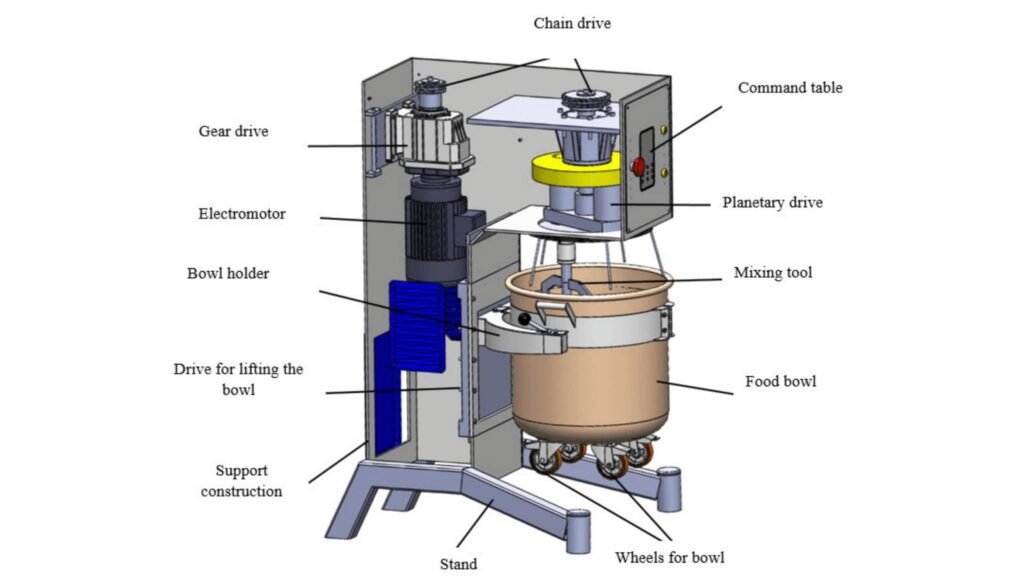
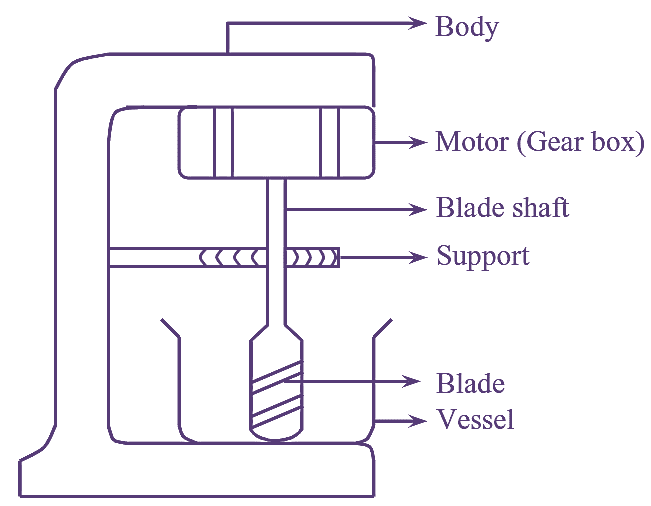
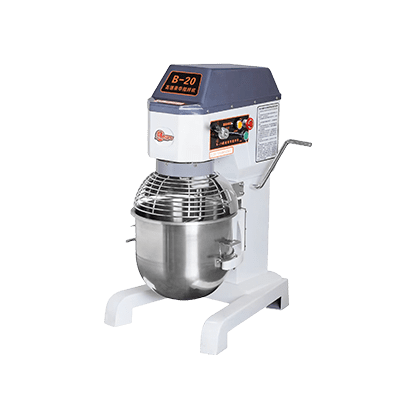
The planetary mixer employs an orbital motion system where a central shaft-mounted attachment revolves around its own axis while simultaneously traveling along the bowl’s circumference. This creates a compound motion pattern—imagine the moon orbiting Earth while Earth orbits the sun. The attachment completes 36 rotations around the bowl’s perimeter for every 60 rotations on its own axis, ensuring complete bowl coverage without repositioning. As a versatile food mixer, this design handles everything from delicate cake batters to pizza dough preparation.
The gear-driven planetary head contains a robust transmission system that converts single-direction motor rotation into the complex dual-motion pattern. Heavy-duty models use metal gearing rated for continuous operation, while economy versions may use nylon gears suitable only for intermittent use. The gear ratio determines mixing aggression—a 3:1 planetary-to-bowl ratio produces gentle folding ideal for delicate batters, while 5:1 ratios generate intensive kneading force for stiff doughs. Professional bread mixer applications often benefit from higher gear ratios that provide the torque needed for extended gluten development.
Bowl capacity utilization significantly affects mixing efficiency in planetary systems. These mixers perform optimally at 50-70% capacity because the attachment needs adequate clearance to generate productive motion. Overloading creates dead zones where ingredients cluster untouched, while underloading causes excessive aeration and extended mixing times. A 20-quart planetary mixer should handle 8-14 quarts of batter or 12-16 pounds of dough for optimal results.
The interchangeable attachment system allows operators to match tool geometry to task requirements. Flat beaters with rigid edges scrape bowl walls clean, incorporating every ingredient particle—essential for precise recipe execution. Wire whisks maximize air incorporation through their thin profile and high surface area, critical for meringues and whipped creams requiring 200-300% volume increase. Dough hooks feature a helix design that mimics hand kneading, pulling dough upward then folding it back continuously to develop gluten without overworking.
Many bakeries underutilize their planetary mixers by running them at maximum speed regardless of task. The optimal approach varies: creaming butter and sugar requires moderate speed (level 4-6 on 10-speed models) for 3-5 minutes to incorporate maximum air, while combining dry ingredients needs only brief low-speed pulsing to prevent flour clouds. Understanding these mechanical relationships prevents both undermixing and the more common problem of overworking delicate batters.
Spiral Mixer Operational Design
Spiral mixers reverse the planetary concept—the agitator remains stationary while the bowl rotates around it. This seemingly simple design change produces profound performance advantages for high-gluten doughs. The fixed spiral arm maintains consistent positioning relative to the dough mass, applying uniform mechanical work throughout the mixing cycle without the variable forces that occur when attachments orbit.
The rotating bowl mechanism operates on a separate motor system independent of the spiral arm. This allows precise control over the relationship between bowl rotation speed and agitator rotation speed. Standard ratios run 1:3 (one bowl rotation for every three spiral rotations), but adjustable models let operators fine-tune this relationship for specific dough characteristics. Higher bowl speeds increase mechanical action intensity, useful for incorporating high-hydration doughs that resist mixing.
The spiral arm itself functions as a continuous dough hook that remains positioned at the bowl’s optimal mechanical advantage point. As the bowl rotates, it presents fresh dough sections to the spiral continuously, ensuring every portion receives identical treatment. This produces superior batch consistency compared to systems where dough position relative to the mixing element constantly changes. The spiral’s helical geometry pulls dough upward and inward, folding it through the center where ingredients concentrate, then redistributing it to the bowl perimeter.
Temperature control represents spiral mixers’ primary technical advantage. Because the bowl rotates slowly relative to the high-speed spiral action, frictional heating distributes across the entire dough mass rather than concentrating in local hot spots. Tests conducted by the Bread Bakers Guild measured final dough temperatures in spiral mixers averaging 4-6°F cooler than identical recipes mixed in planetary systems, despite similar mixing times. This temperature advantage directly impacts fermentation control and final product texture.
Spiral mixers excel at 60-80% bowl capacity, operating with remarkable efficiency across this range. A 60-pound capacity model maintains proper dough tumbling action from 36 to 48 pounds of dough, far wider operational latitude than planetary designs offer. This flexibility proves valuable in production bakeries where batch sizes vary throughout the day based on order volume and production scheduling.
The fixed-bowl removable-bowl distinction affects operational workflow significantly. Fixed-bowl models require manual dough extraction, adding 2-3 minutes per batch but eliminating bowl handling. Removable-bowl designs enable instant batch changeover—operators can pre-weigh ingredients in spare bowls, swap them in seconds, and restart mixing immediately. High-volume operations often invest in three bowls per mixer to maintain continuous production flow.
Horizontal Mixer Continuous Process Systems
Horizontal mixers operate on fundamentally different principles than batch systems, designed for continuous dough production where ingredients feed in one end and mixed dough exits the other in uninterrupted flow. These industrial mixer systems employ two contra-rotating horizontal shafts equipped with specialized paddles or bars that run the length of an enclosed trough, creating a mixing zone that processes ingredients through progressive stages.
The twin-shaft configuration generates intensive mechanical action as ingredients pass between the counter-rotating elements. The shafts typically operate at different speeds—the primary shaft runs at 60-80 RPM while the secondary operates at 45-60 RPM. This speed differential creates shearing forces that rapidly hydrate flour particles and develop gluten networks in remarkably short residence times, often completing full gluten development in 90-120 seconds compared to 8-12 minutes in batch mixers.
Ingredient feeding occurs through precisely calibrated volumetric or gravimetric systems at the mixer’s inlet end. Flour, water, salt, and other components enter through separate ports, their flow rates controlled by automated dosing equipment that maintains exact recipe ratios regardless of production speed variations. The mixing trough length (typically 8-12 feet for commercial installations) provides sufficient retention time for complete ingredient incorporation before discharge.
Continuous systems generate significantly more frictional heat than batch mixers due to their intensive mechanical action and high-speed operation. Final dough temperatures routinely reach 85-95°F, necessitating ingredient temperature pre-conditioning. Many operations use chilled water (38-42°F) and temperature-controlled flour storage (60-65°F) to compensate for mixing-induced heating. Some advanced models incorporate jacketed troughs with circulating coolant, though this adds substantial equipment cost.
The primary disadvantage involves operational inflexibility—horizontal mixers resist recipe changes and batch size adjustments. Starting and stopping the continuous flow disrupts dough consistency, making these systems economical only for large-scale operations producing thousands of pounds of identical dough daily. A commercial bakery producing 5,000+ sandwich loaves per day gains immense efficiency from continuous mixing, while a retail bakery making 200 mixed products would find batch systems far more practical.
Discharge consistency varies based on exit point configuration. Standard horizontal mixers release dough through a bottom chute, creating irregular shapes requiring additional handling. Advanced models incorporate discharge shaping attachments that extrude dough into consistent ropes or sheets, reducing downstream processing requirements and improving overall line efficiency.
Mixing Speed Variable Effects on Dough Development
Mixing speed selection profoundly influences final dough characteristics through its effect on mechanical energy input rate and gluten strand formation patterns. Low speeds (60-120 RPM at the bowl rim) produce gentle folding action suitable for initial ingredient combination without excessive gluten development. This proves essential for chemically-leavened products like muffins and biscuits where minimal gluten formation maintains tender texture.
Medium speeds (180-250 RPM) represent the optimal range for most bread dough mixing. This velocity generates sufficient mechanical action to develop gluten networks adequately while controlling temperature rise through extended mixing cycles. A typical artisan bread dough requires 6-8 minutes at medium speed to reach full gluten development, characterized by smooth surface texture and windowpane test passage (dough stretches thin enough to see light through without tearing).
High-speed mixing (300-400 RPM) accelerates gluten development but carries multiple risks. The intensive mechanical action generates excessive frictional heat, potentially raising dough temperature into ranges that damage yeast viability and disrupt enzyme activity. Additionally, overly aggressive mixing can break established gluten bonds, causing dough degradation visible as rough surface texture and poor gas retention during proofing. High speeds suit only specific applications like quick-mix methods or when processing extremely cold ingredients.
Speed ramping strategies improve mixing outcomes by matching mechanical intensity to dough development stage. Start with low-speed ingredient incorporation (2-3 minutes) to hydrate flour and distribute components uniformly. Transition to medium speed for primary gluten development (4-6 minutes), building structural networks progressively. Some formulations benefit from brief high-speed finishing (30-60 seconds) to achieve final dough smoothness and optimal extensibility.
The relationship between mixing time and speed follows an inverse curve—doubling mixing speed doesn’t halve required time. Due to heat generation and mechanical stress accumulation, high-speed mixing typically reduces time requirements by only 30-40% while significantly increasing temperature rise. A dough requiring 8 minutes at 200 RPM won’t develop properly in 4 minutes at 400 RPM due to excessive heating and potential gluten damage.
Variable frequency drive (VFD) systems now equip many commercial mixers, offering infinitely adjustable speed control rather than fixed gear positions. This technology allows operators to program custom mixing profiles with automatic speed changes at predetermined intervals, ensuring identical treatment for every batch. A pizza dough program might run 2 minutes at 80 RPM (incorporation), 5 minutes at 180 RPM (development), and 1 minute at 120 RPM (smoothing), executed identically regardless of operator experience level.
Bowl Geometry Impact on Ingredient Movement Patterns
Bowl design governs how ingredients circulate during mixing, affecting both processing efficiency and result consistency. Hemispherical bowls common in planetary mixers create natural flow patterns where dough rises along the curved walls then falls back toward the center, promoting even mixing through gravitational assist. The smooth contours prevent ingredient accumulation in corners and minimize scraping requirements.
Straight-sided cylindrical bowls used in many spiral mixers establish different circulation patterns. As the bowl rotates, centrifugal force pushes heavier dough portions outward against the walls while lighter, less-developed areas concentrate in the center. The spiral arm intercepts this center material, pulling it outward and downward, effectively turning the dough inside-out repeatedly. This mechanical action distributes ingredients more rapidly than planetary systems but requires careful capacity management to maintain proper tumbling.
Bowl diameter-to-height ratios significantly affect mixing dynamics. Shallow wide bowls (2:1 diameter:height ratio) expose greater dough surface area to mixing elements, accelerating hydration but increasing evaporation during extended mixing. Deep narrow bowls (1:1.5 ratio) retain moisture better and promote vertical circulation patterns, particularly beneficial for high-hydration doughs that resist mixing. Most commercial mixers use intermediate ratios (1.5:1 to 1.8:1) balancing these competing factors.
The bowl material choice influences both durability and thermal properties. Stainless steel dominates professional applications for its corrosion resistance, ease of sanitation, and dimensional stability. Aluminum bowls offer superior heat dissipation, conducting frictional heat away from dough faster than stainless steel—a meaningful advantage for temperature-sensitive formulations. However, aluminum’s reactivity with acidic ingredients and its softness (which allows scratching that harbors bacteria) limit its use in commercial settings.
Bowl surface finish affects dough behavior subtly but measurably. Mirror-polished interiors allow dough to slide smoothly during mixing, reducing friction-induced heating by 5-8% compared to brushed finishes. However, excessively smooth surfaces can cause high-hydration doughs to slip rather than tumble properly, requiring longer mixing times to achieve development. Many manufacturers apply specific surface treatments—smooth enough for easy cleaning but textured enough to maintain dough engagement—balancing cleanliness with functionality.
Removable versus fixed bowl configurations present distinct operational trade-offs. Removable bowls enable rapid batch changeover and simplified dough discharge but introduce potential alignment issues affecting mixing pattern consistency. Fixed bowls guarantee perfect mechanical alignment but require manual dough removal, adding handling time. Bakeries processing diverse products typically favor removable bowls, while focused operations producing limited varieties often optimize workflow with fixed-bowl systems.
Attachment Tool Selection for Specific Mixing Tasks
Attachment geometry determines the mechanical forces applied to ingredients, making proper tool selection critical for desired outcomes. The flat beater features a broad paddle with squared edges that scrape bowl walls effectively while folding ingredients together. Its design suits medium-viscosity batters (cookie dough, cake batter, frosting) where thorough incorporation matters more than air incorporation or gluten development.
Wire whisks maximize air entrainment through their thin wire construction and high surface area. As wires move through batter, they drag air bubbles along, distributing them throughout the mixture. The number of wires affects performance—6-8 wire balloon whisks suit light cream whipping, while 10-12 wire models handle heavier applications like Swiss meringue. Wire thickness balances strength against air incorporation efficiency; thick wires withstand heavy batters but entrain less air than thin wires that risk bending under load.
Dough hooks come in three primary configurations, each suited to different gluten development scenarios. The C-shaped hook performs well with moderate hydration bread doughs (60-65% water), pulling dough upward along the hook’s curve then releasing it to fall back. Spiral hooks excel at high-hydration doughs (70%+ water), their helical form drawing wet doughs through confined spaces that encourage gluten strand alignment. Roller-style hooks minimize surface contact, reducing friction heat during extended mixing—particularly valuable for artisan breads requiring long, slow gluten development.
The pastry knife (also called paddle blade) features multiple thin blades designed to cut cold fat into flour without softening it through friction. This cutting action creates the layered fat-flour structure essential for flaky pastries, pie crusts, and biscuits. The blade spacing determines final particle size—wider spacing (3/4 inch) produces coarse cutting for rustic textures, while narrow spacing (1/4 inch) creates fine, uniform distribution.
Beater speed relative to bowl size affects mixing efficiency substantially. In a 20-quart planetary mixer, a 10-inch diameter flat beater traveling at 200 RPM covers the bowl’s mixing zone approximately every 12 seconds, contacting any given dough portion 5 times per minute. Reducing to 100 RPM halves contact frequency, requiring doubled mixing time to achieve equivalent development. This relationship explains why experienced bakers adjust speed based on batch size—smaller batches need reduced speeds to prevent overmixing despite their proportion to rated capacity.
Tool material impacts both durability and contamination risk. Aluminum attachments offer light weight and corrosion resistance but oxidize when exposed to acidic ingredients (citrus, vinegar, cream of tartar), potentially discoloring products. Stainless steel eliminates this issue while providing superior scratch resistance, though its weight causes more rapid wear on mixer gearing. Coated attachments combine durability with non-reactive surfaces—useful for operations handling diverse formulations—but damaged coatings risk delamination into food products.
Mixing Time Calculation Based on Dough Characteristics
Proper mixing duration varies dramatically based on dough hydration level, flour protein content, and desired gluten development stage. A basic formula provides starting points: divide target gluten development percentage by actual protein content, then multiply by baseline mixing time. For a 70% development target using 12% protein flour with an 8-minute baseline, calculate (70/12) × 8 = 46 minutes—clearly an error, revealing why formulas alone prove insufficient without empirical calibration.
Hydration ratio (water weight ÷ flour weight × 100) fundamentally affects mixing requirements. Low-hydration doughs (50-55%), like bagel dough, resist mechanical action due to limited water to facilitate protein mobility. These require extended mixing times (10-14 minutes) at medium speeds despite their stiff consistency. Medium-hydration doughs (60-67%) develop optimally in 6-9 minutes under standard conditions. High-hydration doughs (70%+ water) present paradoxes—while water accelerates gluten formation, the slack consistency makes mechanical energy transfer less efficient, often requiring 10-15 minutes despite abundant moisture.
Flour protein content correlates directly with mixing time requirements through gluten-forming potential. Low-protein flours (8-10% protein) lack sufficient glutenin and gliadin to form extensive networks, reaching maximum development in 4-6 minutes. Medium-protein bread flours (11-13%) require 7-10 minutes for full development. High-protein flours (14%+ protein) demand 12-16 minutes to maximize their bonding potential, and premature mixing termination leaves substantial latent strength undeveloped.
The windowpane test provides practical development assessment—stretch a small dough portion thin enough to see light through without tearing. Achieving this indicates 80-90% gluten development, suitable for most bread applications. Some formulations intentionally target lower development (60-70%) for softer crumb or require higher development (95%+) for structural strength. Mixing time adjustments of 20-30% move dough through these development stages.
Ingredient temperature significantly alters mixing time requirements through its effect on protein hydration rate and enzyme activity. Cold dough components (45-50°F) slow biochemical reactions, requiring 15-25% longer mixing times to achieve equivalent development. Warm ingredients (75-80°F) accelerate reactions but risk over-development and excessive yeast activity if timing isn’t reduced proportionally. Most professional formulations specify 68-72°F ingredient temperatures to standardize mixing behavior across production runs.
Multi-stage mixing protocols optimize development while controlling temperature rise. The autolysis method combines flour and water initially, mixing briefly (2-3 minutes) then resting 20-60 minutes. This allows enzymatic flour hydration without mechanical work input, reducing subsequent mixing time by 30-40% while producing more extensible doughs. The intensive-improved method employs high-speed mixing (400+ RPM) for 3-4 minutes, developing gluten rapidly but requiring precise timing to prevent over-development. Each approach suits specific products and production constraints.
Temperature Control Mechanisms During Mixing Operations
Dough temperature management during mixing directly affects fermentation control, final product texture, and batch consistency. Three primary heat sources contribute to temperature rise: mechanical friction between dough and mixing elements, ambient heat transfer from the environment, and exothermic chemical reactions within the dough itself. Friction typically contributes 70-80% of total heat input during standard mixing cycles.
The friction coefficient varies based on dough consistency and mixing element type. Stiff doughs generate more friction than slack doughs due to greater resistance against bowl walls and mixing arms. Planetary mixers with their continuous bowl contact produce more frictional heating than spiral mixers where dough tumbles freely between contact points. A standard bread dough mixed in a planetary system can experience 10-15°F temperature rise over 8 minutes, while identical dough in a spiral mixer rises only 6-9°F.
Ingredient temperature compensation strategies counteract mixing-induced heating by pre-chilling components. The ice compensation method calculates required ice weight to substitute for mixing water—subtract desired final dough temperature from (flour temperature + ambient temperature + friction factor), multiply by 0.2, then subtract from total water weight to determine ice weight. For a 75°F target with 70°F flour, 72°F ambient, and 25°F friction factor: [(70+72+25) – 75] × 0.2 = 18.4% of water weight as ice.
Water chilling systems installed in commercial bakeries maintain consistent 38-42°F mixing water, eliminating ice handling variability. These systems cost $800-2,500 but deliver precise temperature control, particularly valuable for high-volume operations producing hundreds of batches weekly. Coupling chilled water with temperature-controlled ingredient storage (maintaining flour at 60-65°F) creates stable thermal environments where mixing behavior remains consistent regardless of seasonal ambient variations.
Bowl pre-conditioning through refrigeration or warming helps temperature management, particularly for batch systems processing high-hydration doughs. Chilling stainless steel bowls to 45-50°F before adding ingredients provides thermal mass that absorbs frictional heat during mixing. Some bakeries maintain dedicated bowl refrigerators (38-42°F) specifically for this purpose, particularly when producing temperature-sensitive products like croissant dough requiring 60-65°F final temperature.
Mixing speed reduction trades cycle time for temperature control—running at 60-70% of standard speed extends mixing duration by 40-50% while reducing friction heat generation by 30-35%. This proves particularly valuable for extended fermentation doughs where yeast population control demands strict temperature adherence. The productivity penalty often justifies itself through improved fermentation consistency and reduced batch variation.
Coolant-jacketed bowls represent the premium temperature control solution, circulating chilled water or glycol through hollow bowl walls during mixing. These systems maintain precise dough temperature within ±2°F regardless of mixing intensity or duration, though equipment costs reach $8,000-15,000 above standard bowl prices. Jacket integration adds maintenance complexity and potential leak points, making these systems economical only for large operations where temperature precision directly impacts product value.
Maintenance Requirements for Optimal Equipment Performance
Proper mixer maintenance prevents premature failure, ensures consistent batch quality, and protects significant capital investment. Commercial mixers cost $3,000-30,000 depending on type and capacity, justifying maintenance programs that extend equipment life from 5-7 years (neglected) to 15-20+ years (well-maintained). Daily, weekly, and monthly protocols address different wear patterns and contamination risks.
Daily cleaning procedures begin immediately after production concludes. Remove attachments and bowls, washing with hot water (150-160°F) and commercial detergent formulated for food equipment. Sanitize with approved solutions (200 ppm quaternary ammonium or 50 ppm chlorine), allowing proper contact time (30-60 seconds minimum). Wipe mixer bodies with food-safe sanitizer, paying particular attention to the attachment interface where dough residue accumulates. Never use high-pressure water spray on gear heads or motor housings—moisture infiltration causes catastrophic electrical failures. While home kitchen mixers can tolerate occasional deep soaking, commercial equipment requires more careful moisture management to protect electrical components.
Weekly maintenance includes lubrication of exposed moving components using food-grade lubricants. The bowl height adjustment mechanism requires 2-3 drops of NSF-certified oil, applied while operating the adjustment lever through its full range to distribute lubricant evenly. Check attachment locking mechanisms for proper engagement—worn latches allow attachments to vibrate loose during operation, potentially causing severe damage. Inspect power cords and switch assemblies for damage or looseness indicating electrical issues requiring professional service.
Quarterly servicing should involve professional technicians performing internal gear housing inspection and oil changes. Planetary mixer transmissions typically require 16-32 ounces of specific weight gear oil (ISO VG 220 for most models), changed every 500 hours of operation or six months, whichever occurs first. Contaminated lubricants containing metal particles, moisture, or degraded oil cannot protect gears adequately, accelerating wear and risking sudden failure. Many bakeries neglect this critical maintenance until audible grinding noises indicate severe damage—by then, repair costs often exceed $1,200-3,000.
Belt-driven models require tension inspection and adjustment every 200 operating hours. Loose belts slip, reducing power transmission efficiency and causing uneven mixing. Overtightened belts stress bearings prematurely, causing $400-800 bearing replacement needs. Proper tension typically allows 1/2-inch deflection when moderate thumb pressure is applied midway between pulleys. Replace belts showing cracks, fraying, or glazing (shiny surface) regardless of tension condition—these indicate age-related deterioration that leads to unexpected failure.
Mixing bowl inspection identifies stress cracks, deformation, or coating damage requiring corrective action. Stainless steel bowls develop cracks near handle attachment points or bowl bases after years of thermal cycling and mechanical stress. Continued use risks catastrophic failure during operation—a 60-pound dough-filled bowl dropping three feet creates severe injury and equipment damage risk. Non-destructive testing (dye penetrant inspection) costs $75-150 but definitively assesses bowl integrity, preventing failures that could cost $8,000-25,000 in liability and equipment damage.
Production Efficiency Optimization Through Mixing Understanding
Strategic equipment placement within bakery layouts directly affects production throughput and labor efficiency. Position mixers between ingredient storage and dividing/shaping stations, minimizing dough transport distances. When mixing completes, immediate access to a dough sheeter or manual shaping area reduces handling time and maintains dough temperature consistency. Arrange multiple mixers to share peripheral equipment—scales, ingredient bins, and cleaning stations—reducing floor space requirements by 20-30% compared to isolated installations. Ensure adequate clearance above bowl-lift mixers for safe operation; undersized work areas create collision hazards that slow operations.
Batch scheduling coordination prevents bottlenecks when mixing capacity limits production. Stagger start times for different dough types, allowing sequential mixer use rather than requiring parallel capacity. Many bakeries discover they need two 60-quart mixers less than one 60-quart plus one 120-quart mixer because staggered scheduling eliminates idle equipment time. Production scheduling software can model these scenarios, identifying optimal mixer combinations for specific product mixes.
Pre-batching ingredient assemblies eliminates mixing downtime between batches. Many operations maintain three ingredient containers per mixer—one mixing, one in use, one being prepared—allowing continuous operation without pauses for weighing and assembly. This approach requires additional containers and staging space but increases mixer utilization from 60-70% (single container) to 85-95% (three-container rotation).
Automated ingredient dispensing systems further reduce labor and improve consistency. Volumetric feeders deliver flour within ±0.5% accuracy, gravimetric systems achieve ±0.1%. While equipment costs range $15,000-80,000 installed, high-volume bakeries producing 1,000+ pounds of dough daily recover investments through reduced labor costs and eliminated batch variation. These systems typically couple with mixer programmable controllers, creating fully automated mixing cycles requiring minimal operator intervention.
Mix-to-target strategies based on real-time dough temperature monitoring prevent over or under-development due to thermal variations. Install thermocouple probes that continuously measure dough temperature during mixing, automatically terminating cycles when targets are reached regardless of elapsed time. This compensates for ingredient temperature variations, equipment performance differences, and environmental fluctuations that would otherwise create batch inconsistency. Temperature-controlled mixing produces batches with 95%+ consistency metrics compared to 85-90% for time-based approaches.
Frequently Asked Questions
What determines the ideal mixing speed for different types of dough?
Dough hydration level and desired gluten development primarily determine optimal mixing speed. Low-hydration doughs like bagel dough require moderate speeds (180-220 RPM) for 10-14 minutes to overcome their stiff resistance. High-hydration ciabatta doughs need similar moderate speeds but benefit from extended mixing (12-15 minutes) despite their slack texture. Delicate batters like muffins require low speeds (100-150 RPM) for minimal gluten development. The protein content of flour also matters—high-protein bread flours can handle more aggressive mixing than low-protein cake flours without structural damage.
How do I prevent dough temperature from rising too much during mixing?
Use chilled water (38-45°F) instead of room-temperature water to compensate for friction-generated heat. Calculate ice requirements using this method: subtract your target final dough temperature from the sum of flour temperature, ambient temperature, and friction factor (typically 25°F for standard mixers). The result, multiplied by 0.2, tells you what percentage of water weight to substitute with ice. Additionally, refrigerate mixing bowls to 45-50°F before use, and consider running mixers at 70% of standard speed to reduce friction generation while extending mixing time.
Why does my spiral mixer produce better bread than my planetary mixer?
Spiral mixers generate less frictional heat because the bowl rotates while the spiral remains stationary, distributing mechanical work more evenly throughout the dough mass. This results in 4-6°F lower final dough temperatures compared to planetary mixers, which improves fermentation control. Additionally, the spiral’s fixed position applies consistent mechanical stress to all dough portions as they rotate past, creating more uniform gluten development. Planetary mixers work well for versatile applications, but spiral mixers specialize in bread dough, making them superior for that specific task.
How full should I fill the mixing bowl for best results?
Planetary mixers operate most efficiently at 50-70% capacity because attachments need space to generate their orbital motion effectively. A 20-quart planetary should handle 10-14 quarts of batter or 8-12 pounds of dough. Spiral mixers work best at 60-80% capacity, maintaining proper dough tumbling across this range. A 100-pound flour capacity spiral mixer can effectively process 60-80 pounds of dough. Operating below these ranges wastes time and energy, while exceeding them risks motor overload and uneven mixing with inadequate gluten development.
What causes my mixer motor to overheat during operation?
Motor overheating typically indicates mechanical overload from excessive batch size, improper gear lubrication, or worn drive components. Check that you’re operating within rated capacity—overloading by just 20% can double motor stress. Inspect gear housing oil levels and condition; contaminated or insufficient lubrication causes friction that transfers heat to the motor. Verify attachment height adjustment is correct; improper clearance forces the motor to work harder. If the mixer is older than 10 years, worn bearings or belts may cause efficiency losses requiring professional service.
How do different attachment types affect mixing efficiency?
Flat beaters provide maximum bowl coverage for thorough ingredient incorporation, ideal for cookie dough and frostings, completing mixing in 5-7 minutes. Wire whisks incorporate air rapidly, reducing whipping cream time from 6-8 minutes (by hand) to 3-4 minutes but work poorly with dense mixtures. Dough hooks minimize surface contact to reduce friction heating during the 8-12 minute bread dough development cycle. Pastry knives cut cold butter efficiently, completing pie crust mixing in 2-3 minutes versus 8-10 minutes with flat beaters. Matching attachment geometry to task requirements can improve mixing efficiency by 40-60%.
Maximizing Your Mixer’s Operational Lifetime
Equipment longevity stems from understanding mechanical stress patterns and implementing protective operational habits. Never shift gears while the mixer operates—engage speed changes only after coming to complete stops to prevent gear tooth damage. Allow mixers to run empty for 30 seconds before adding ingredients, giving lubricants time to distribute throughout mechanical components and reduce startup friction. Similarly, run mixers briefly after emptying bowls to clear residual dough from unreachable areas.
Invest in multiple bowl sets to minimize changeover time while protecting bowl integrity. Rotating three bowls through mixing cycles distributes mechanical stress and thermal cycling across the set, extending individual bowl life by 60-80%. This also enables faster production turnaround—one bowl mixing, one staging for next batch, one being cleaned—eliminating mixer idle time that reduces daily production capacity.
The financial return on proper maintenance proves substantial. A neglected $8,000 commercial mixer requires major service ($2,200 average) after 3-4 years and complete replacement after 7 years. Well-maintained identical equipment operates 15-20 years with only routine service costing $400-600 annually—a difference of $12,000-18,000 over the equipment’s lifetime. These figures justify dedicating staff time to maintenance protocols and incorporating them into standard operating procedures rather than treating them as optional tasks postponed during busy periods.
Key Takeaways
- Bakery mixers operate through coordinated mechanical actions that distribute ingredients, develop gluten networks, and manage temperature—understanding these principles enables optimization of batch cycles and product consistency
- Different mixer types (planetary, spiral, horizontal) employ distinct mechanical approaches suited to specific dough characteristics, with selection based on production volume, product mix, and space constraints
- Mixing speed, duration, and temperature directly affect gluten development and final product texture, requiring careful calibration based on dough hydration level and flour protein content
- Equipment maintenance following manufacturer protocols extends commercial mixer lifespans from 5-7 years (neglected) to 15-20+ years (well-maintained), protecting significant capital investments
- Strategic workflow design incorporating proper equipment placement, batch scheduling, and pre-staging maximizes mixer utilization rates from 60-70% to 85-95%, substantially improving production efficiency
References
- BAKERpedia – “Mixer Design” – https://bakerpedia.com/processes/mixer-design/ – Technical specifications on commercial mixer design principles and engineering considerations for bakery applications
- BAKERpedia – “Mixing Processes” – https://bakerpedia.com/processes/mixing/ – Comprehensive overview of mixing purposes, mechanisms, and equipment types used in industrial baking operations
- Dough Tech – “Three Main Types of Mixers” – https://www.doughtech.com/learn-about-the-three-main-types-of-mixers/ – Comparison of horizontal, spiral, and planetary mixer advantages and operational characteristics
- Empire Bake – “Choosing the Right Mixer: The Ultimate Guide to Bakery Mixers” – https://empirebake.com/blog/2023/06/02/choosing-the-right-mixer-the-ultimate-guide-to-bakery-mixers/ – Equipment selection guide covering mixer types, capacities, and application suitability
- Twothousand Machinery – “The Ultimate Guide to Dough Mixers” – https://www.twothousand.com/the-ultimate-guide-to-dough-mixers-in-your-bakery-efficiency-type-and-maintenance/ – Operational efficiency strategies, maintenance protocols, and capacity optimization techniques
- Baking Business – “Clear Specifications Help Bakers Choose Best Mixer” – https://www.bakingbusiness.com/articles/65058-clear-set-of-specifications-helps-bakers-choose-best-mixer – Professional guidance on sizing mixers based on absorption rates, batch weights, and production requirements
- VMI Group – “4 Things to Keep Bakery Equipment Running Smoothly” – https://mixing-experts.com/4-things-to-know-to-keep-bakery-equipment-running-smoothly-over-the-years/ – Best practices for equipment maintenance, hygiene protocols, and longevity optimization
- IQS Directory – “Types, Applications and Benefits of Mixers” – https://www.iqsdirectory.com/articles/mixer/types-of-mixers.html – Industrial mixer classifications, technical specifications, and operational parameters across food processing applications


