
A stand food mixer can handle heavy dough, but success depends on motor power, build quality, and mixer design. Models with at least 500 watts, metal gears, and sufficient weight typically manage stiff doughs like bagels or pizza crust effectively, while underpowered mixers struggle and may fail prematurely.
What Defines Heavy Dough
Heavy dough refers to mixtures with low hydration ratios between 50-65%, where the flour-to-water balance creates a stiff, dense consistency. Bagel dough sits at 55-65% hydration, while pretzels and certain pizza doughs fall into the same category. These doughs demand significantly more mechanical force to knead compared to standard bread (65-75% hydration) or high-hydration varieties like ciabatta (75-90%).
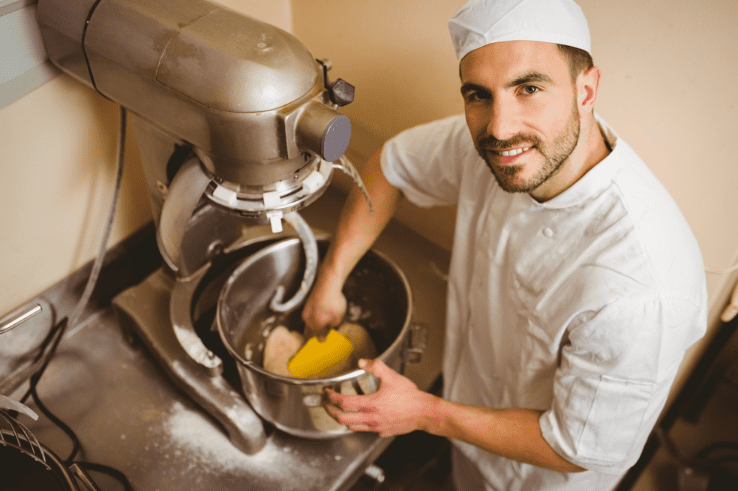
The distinction matters because low-moisture doughs resist movement. When a mixer attempts to knead them, the motor must generate enough torque to push through this resistance without overheating. According to research from King Arthur Baking, bagels are made from stiff, dry dough with hydrations in the 55 to 65% range, compared to soft sandwich or crusty artisan breads which are usually 65% hydration and higher. This tighter structure creates what bakers call “toothy chew” but poses challenges for kitchen equipment.
Professional bakeries sometimes use specialized equipment like a dough sheeter for rolling these dense doughs into uniform thickness, though stand mixers remain the primary tool for initial mixing and kneading in most settings. The physical properties of heavy dough mean it can wrap around hooks, generate excess friction heat, and place sustained stress on motor components that lighter batters never approach.
Motor Power Requirements
Wattage gets attention but tells an incomplete story. Torque determines why some machines with 350 watts of power shut down while making stiff bagel bread dough and others with just 250 watts managed to knead the same dough perfectly, as explained by mechanical engineering professor Bridget Smyser. The key difference lies in how motors translate electrical power into rotational force at lower speeds.
Most stand mixers operate between 250-600 watts, but for bread dough, anything less than 500 watts is not going to cut it for regular use, with ideal power being 575 to 600 watts to withstand the full kneading process without struggling. A 300-watt motor might handle occasional cookie dough but faces a different challenge with dense bread: it must maintain force through extended mixing periods of 8-12 minutes rather than the quick bursts needed for lighter tasks.
Direct-drive motors deliver power more efficiently than belt systems. They minimize energy loss between the motor and mixing attachment, which becomes critical when resistance increases. The gear transmission also plays a role—some premium mixers use metal gearing that maintains consistent power delivery across all speed settings, while budget models may only achieve their rated wattage at maximum speed.
Commercial-grade mixers sometimes rate power in horsepower rather than watts, with 1 HP (roughly 750 watts) considered the threshold for serious bread production. However, home bakers working with 1-2 loaves per session can manage with lower power if other design factors compensate.
Build Quality and Materials
Internal components separate reliable mixers from those destined for early failure. Materials should ideally have metal mechanisms rather than plastic, ensuring that gears and inner mechanisms are durable enough not to bend or even break when in the middle of a kneading session. Nylon gears, common in budget models, strip easily under sustained load.
User forums reveal a pattern: planetary mixers wrap dough around the dough hook and drag it around the bowl, and little 300 watt mixers will strip out the nylon gear in about 6 months with weekly bread dough mixing. This failure mode occurs because plastic components heat up from friction and lose structural integrity. Metal gears, while more expensive to manufacture, maintain their shape under stress and dissipate heat more effectively.

Weight contributes to stability. If a mixer is not heavy enough (looking at around 20 pounds plus), it should have a design that gives it stability, such as suction cups that grip the surface. Lighter mixers walk across countertops during vigorous kneading, which poses safety risks and indicates the motor lacks sufficient torque. The machine moves because it cannot move the dough.
Bowl capacity matters less than many assume. A 5-quart bowl handles typical home baking loads, but attempting to maximize capacity with heavy dough stresses the motor. Manufacturers often provide optimistic capacity ratings that don’t account for the difference between whipping cream and kneading bagel dough.
Design Architecture Differences
Planetary mixers dominate the home market, with a stationary bowl and rotating attachment that orbits around a central axis. This design works well for many tasks but faces inherent limitations with heavy dough. Planetary mixers don’t knead dough at all—they just spin the dough on the hook and scrape it against the side of the bowl, creating friction and heat that can damage yeast.
The problem intensifies because dough tends to climb up the hook rather than stay in contact with the bowl sides where mixing occurs. This behavior, called “dough climbing,” signals insufficient torque. The mixer cannot push through the dough mass, so the dough moves with the hook instead of being worked by it. Some bakers address this by stopping periodically to push dough back down, but this defeats the hands-free advantage.
Spiral mixers, more common in commercial settings, rotate both the bowl and a spiral dough arm. With both the bowl and the center mixer post rotating, this moves the dough and reduces drag, so less friction heat is generated. The dual-rotation design prevents climbing and distributes kneading force more evenly. Models like the Ankarsrum use this approach in a home-sized format, though at premium prices.
Tilt-head versus bowl-lift designs affect heavy dough performance indirectly. Tilt-head models allow easier bowl access but can bounce during vigorous mixing if the locking mechanism isn’t robust. Bowl-lift mixers provide more stability but require adequate clearance for raising and lowering the bowl.
Common Failure Modes
Specific problems emerge when underpowered or poorly designed mixers tackle heavy dough. The motor may slow audibly, indicating it’s reaching maximum torque capacity. Some units include thermal protection that shuts them down before overheating, while others lack this safeguard and risk permanent damage.
Under heavy loads with extended mixing time periods, you may not be able to comfortably touch the top of the stand mixer, as noted in KitchenAid troubleshooting guides. Excessive heat suggests the motor is working beyond its design parameters. Continued use in this state accelerates wear on electrical components and mechanical parts.
Walking—when the mixer moves across the counter—indicates a power-to-weight imbalance. The motor generates vibration it cannot absorb, transferring energy into lateral movement rather than mixing action. This often coincides with incomplete gluten development because the dough isn’t experiencing consistent mechanical work.
Stripped gears represent catastrophic failure. The symptom appears suddenly: the mixer runs but the attachment doesn’t move, or moves erratically. This typically results from cumulative damage rather than a single incident. Each heavy dough session weakens plastic gearing slightly until it fails completely. Replacement gears cost $30-60 but many owners discover that continued heavy use will strip replacements as well.
Optimal Mixer Specifications
Research across baker forums and professional reviews points to consistent specifications for reliable heavy dough mixing. Mixers in the 400-600 watt range offer a good balance of power and versatility, handling most common baking tasks including kneading bread dough and mixing thicker batters without straining the motor.
The global stand mixer market was valued at $2.6 billion in 2024 and is projected to reach $3.8 billion by 2034, driven partly by improved motor technology and consumer awareness of power requirements. Premium segments focus on torque optimization rather than just wattage increases.
Brand matters because established manufacturers test extensively with various dough types. The Ankarsrum Original Stand Mixer, with its 600-watt motor and unique design where the motor is at the base rather than the top, can handle even the stiffest bread doughs without wobbling and shaking during vigorous kneading. The base-mounted motor creates a lower center of gravity that improves stability.
For frequent bread bakers, professional-series mixers justify their cost through longevity. KitchenAid Pro 600, Bosch Universal Plus, and similar models use commercial-grade components that tolerate repeated heavy use. Their motors deliver consistent torque across speed ranges, and metal transmissions maintain power delivery under load.
Budget considerations shouldn’t compromise on critical features. A $200 mixer with 500 watts and metal gears outperforms a $150 model with 600 watts and plastic internals. The marketing emphasis on wattage misleads consumers who don’t understand that torque, build quality, and thermal management matter more for heavy dough applications.
Practical Usage Guidelines
Operating technique affects outcomes as much as machine specifications. In a stand mixer with a dough hook, dough should be kneaded on no more than a medium speed and should take 8 to 12 minutes. Higher speeds generate excessive friction heat that damages yeast and can stress the motor unnecessarily.
Start with proper hydration for mixer use. While hand-kneaded bread can work with very stiff doughs, when using a stand mixer, the dough needs to be softer and deep enough to make good contact with the side of the bowl, dry enough to pull away from the sides yet wet enough to stay very soft and tacky to the touch. This “mixer hydration” falls slightly higher than traditional recipes specify—perhaps 2-3% more water.
Bowl capacity guidelines differ for heavy dough. If a mixer claims 6-quart capacity for general use, assume 4 quarts maximum for bagel or pizza dough. For bread dough, a mixer with a capacity of at least 4.5 quarts is recommended, though this refers to working capacity rather than bowl volume.
Monitor dough temperature during extended mixing. Friction generates heat, and dragging dough against the inside of the bowl causes friction heat that raises dough temperature, knocking it out of desired dough temperature (DDT) and damages yeast. Professional bakers target final dough temperatures of 75-78°F. If mixing drives temperature above 80°F, reduce speed or mix in shorter intervals.
Maintenance extends mixer life. The gears in KitchenAid Pro 5 Plus are all metal, and proper synthetic food-grade grease in the transmission helps maintain smooth operation. Annual servicing might seem excessive for home equipment, but for heavy users, it prevents premature failure.
Frequently Asked Questions
Can a 300-watt stand mixer handle bread dough?
A 300-watt mixer can technically knead bread dough occasionally, but regular use with heavy doughs will likely cause premature wear or failure. These lower-power models work better for softer doughs like brioche or enriched breads that have higher moisture content. For weekly bread baking, particularly with low-hydration varieties, invest in a minimum 500-watt model with metal gearing.
Why does my mixer slow down when kneading?
Slowing indicates the motor has reached its maximum torque capacity for the load. The dough resistance exceeds what the motor can overcome at that speed setting. Try reducing speed one level or adding small amounts of liquid to soften the dough slightly. Persistent slowing means the mixer isn’t powerful enough for that particular dough recipe and batch size.
Should I buy a tilt-head or bowl-lift mixer for heavy dough?
Bowl-lift models generally handle heavy dough better due to superior stability and stronger motor mounting. However, well-built tilt-head mixers in professional series can also perform adequately. Focus on motor power, weight, and build quality rather than lift mechanism alone. A 575-watt tilt-head with metal components outperforms a 400-watt bowl-lift with plastic gears.
How do I prevent dough from climbing the hook?
Dough climbing often indicates insufficient torque or improper hydration. Lower the mixing speed, ensure your dough has adequate moisture for mixer use (slightly wetter than hand-kneading recipes), and verify your bowl sits at the correct height. If climbing persists despite adjustments, the mixer likely lacks the power needed for that specific dough density.
Final Thoughts
The question of whether stand mixers handle heavy dough lacks a simple yes or no answer. It depends entirely on matching mixer capabilities to dough characteristics and usage frequency. A properly specified mixer with adequate power, solid construction, and appropriate design absolutely handles challenging doughs that would be exhausting to knead by hand.
The market evolution toward higher-torque motors and improved thermal management reflects baker demand for reliable performance with all dough types. When specifications align with intended use—particularly that 500-watt minimum with metal components—stand mixers prove themselves capable partners in bread production. The failures people experience typically trace back to underpowered models marketed beyond their actual capabilities or using inappropriate technique for the equipment at hand.
For anyone serious about regular bread baking, treating the mixer as a long-term investment rather than a convenience appliance makes sense. The premium for adequate power and quality construction pays back through years of reliable service and consistently developed dough.


