
Small bakeries typically need planetary mixers in the 10-30 quart range for versatile baking tasks, or compact spiral mixers for bread-focused operations. A 20-quart planetary mixer handles most small bakery needs, mixing up to 25 pounds of bread dough while accommodating cakes, cookies, and pastries through interchangeable attachments.
Understanding Mixer Types for Small Bakeries
The two main mixer categories serve different production needs. Planetary mixers feature a stationary bowl with a rotating attachment that moves in a planetary motion—spinning on its own axis while orbiting the bowl. This design creates multiple contact points with ingredients, making them exceptionally versatile. The attachments (flat beater, dough hook, wire whip) swap out quickly, allowing you to move from cookie dough to whipped cream to bread within the same shift.

Spiral mixers operate differently. Both the bowl and the spiral hook rotate, but only the bowl moves in two directions. This dual rotation keeps dough cooler during mixing—a critical factor for artisan breads requiring precise fermentation control. The spiral hook works only one section of dough at a time, allowing the rest to relax between kneading passes. This mimics hand kneading more closely than planetary action.
For small bakeries producing varied products—birthday cakes in the morning, dinner rolls in the afternoon, cookie dough in the evening—planetary mixers deliver the flexibility you need. If your menu centers on artisan bread, bagels, or pizza, a spiral mixer produces superior gluten development and dough consistency.
Capacity Considerations for Small Operations
A 10-quart planetary mixer handles light-to-moderate workloads. It can mix approximately 5 pounds of bread dough or 8 pounds of cake batter per batch. These countertop units fit easily into compact kitchens, though they struggle with continuous heavy-duty use. Motor strength typically maxes out around 1/2 horsepower—adequate for occasional bread batches but not built for all-day dough production.
The 20-quart capacity represents the sweet spot for most small bakeries. These mixers accommodate 25 pounds of bread dough, 20 pounds of pizza dough, or 30 pounds of cake batter. Most 20-quart models are countertop units with 1 to 1.5 horsepower motors. This power level handles dense doughs without overheating, assuming you’re not running continuous eight-hour shifts. A typical small bakery producing 50-100 loaves daily finds this capacity sufficient.
Moving to 30-quart floor mixers increases capacity to 45 pounds of bread dough per batch. These units transition from countertop to floor-standing designs, requiring more kitchen space but offering 2-3 horsepower motors. The jump from 20 to 30 quarts makes sense only if your current 20-quart mixer runs multiple batches consecutively, creating production bottlenecks. Otherwise, you’re paying for capacity you won’t use.
Small bakeries often underestimate batch sizing. The bowl shouldn’t fill beyond two-thirds capacity—ingredients above the attachment’s working height won’t mix properly, and dough expansion during mixing can cause overflow. Account for your dough’s absorption ratio (water weight divided by flour weight) when calculating batch sizes. Higher hydration doughs occupy more volume than low-hydration types.
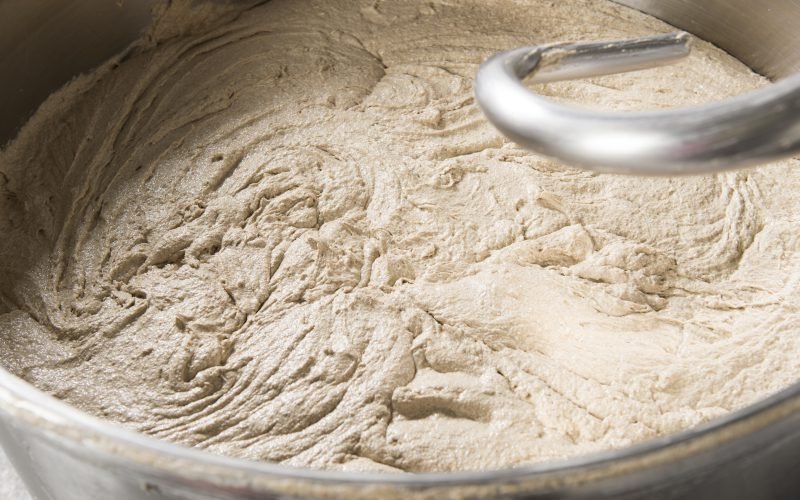
Key Features That Matter
Motor type significantly impacts durability and maintenance. Belt-driven motors use a strap system to turn the agitator, making repairs simpler and parts less expensive. They handle standard mixing tasks reliably, though belts wear over time and need periodic replacement. Gear-driven motors connect directly to the transmission, eliminating belts. They provide more consistent power and typically last longer under heavy use, but repairs cost more when components eventually fail.
Speed settings give you control over mixing intensity. Most planetary mixers offer three speeds: first gear for heavy doughs, second for batters and creaming, third for whipping. Some models provide variable speed dials rather than fixed gears, allowing finer adjustments. Bread doughs always mix on first speed—higher speeds generate excessive heat and can damage the transmission when working dense mixtures.
Bowl lift systems come in two varieties. Manual systems use a wheel or lever to raise and lower the bowl into position. They’re mechanically simple and rarely malfunction. Electric bowl lifts operate with buttons, automatically positioning the bowl at the right height. These systems save time and reduce physical strain on operators, though they add complexity and potential maintenance points. Smaller countertop mixers sometimes skip bowl lifts entirely, using a tilt-head design where the entire upper housing tilts back for bowl access.
Safety guards around the bowl protect hands from moving attachments and prevent objects from falling into mixing ingredients. Quality mixers include automatic shutoff—the motor won’t start unless the guard is properly closed and locked. This feature prevents injuries and should be non-negotiable in commercial settings.
Attachment hub size matters if you plan to expand capabilities. A #12 hub accommodates the widest range of attachments, from meat grinders to pasta makers. Some smaller mixers use proprietary attachment systems that limit your options. Verify attachment compatibility before purchasing if you want to add capabilities later.
Recommended Mixer Specifications
For bakeries producing 40-80 pounds of dough daily across multiple product types, start with a 20-quart planetary mixer. Look for 1.5 horsepower minimum, three-speed operation, and manual or electric bowl lift depending on budget. Brands like Globe, Hobart, and Avantco offer reliable options in the $800-2,000 range. Globe reports a 1.4% warranty claim rate versus a 4% industry average, suggesting above-average reliability.
Bread-focused bakeries benefit from spiral mixers even at small scales. A compact spiral mixer with 20-quart capacity handles 17-20 pounds of dough per batch. These units maintain lower dough temperatures than planetary mixers—critical for long fermentation processes in artisan bread production. Expect to spend $1,500-3,000 for a quality spiral mixer, though the investment pays off in dough consistency and longer shelf life for finished products.
Consider motor durability relative to production schedules. If you’re mixing dough multiple times daily, every day of the week, commercial-grade components justify higher upfront costs. Weekend bakeries or operations mixing only 2-3 batches daily can often operate successfully with lighter-duty equipment, though you’ll likely replace it sooner.
Space planning extends beyond the mixer’s footprint. Planetary mixers need clearance above for the tilt-head mechanism—confirm you have sufficient space between the mixer and overhead cabinets. Spiral mixers typically require more floor space than planetary models of equivalent capacity. Allow room for operators to move around the mixer comfortably and access controls without obstruction.
Pairing Mixers with Other Equipment
Small bakeries often need complementary equipment to maximize efficiency. A dough sheeter works particularly well alongside mixers for operations producing laminated doughs like croissants or puff pastry. After the mixer develops your dough, the sheeter rolls it to consistent thickness without overworking the gluten structure. Compact tabletop sheeters suit small bakeries with limited space, handling dough sheets up to 12-18 inches wide.
Divider-rounders complement mixer workflow for bread production. Once your spiral mixer produces perfect dough, a divider portions it into equal weights while a rounder shapes each piece. This combination reduces manual labor and improves portion consistency. Some small bakeries find that adding these tools makes more sense than upgrading to a larger mixer—you maintain quality while increasing throughput.
Bowl capacity sometimes matters less than having multiple bowls. With extra bowls, you can prep the next batch while the current one mixes, then swap bowls quickly between batches. This approach maximizes mixer utilization without requiring larger equipment. Most manufacturers sell additional bowls separately, typically $100-300 depending on size.
Maintenance and Longevity
Proper maintenance extends mixer lifespan significantly. Clean attachments and bowl after each use—dried dough buildup causes unnecessary wear. Wipe down the mixer body daily, paying attention to the bowl lift mechanism where flour and oil can accumulate. Never use the mixer to mix below minimum capacity (typically 2-4 pounds for a 20-quart mixer) as this can damage the transmission.
Lubrication schedules vary by manufacturer but generally require quarterly attention. Gear-driven models need gear oil checks, while belt-driven motors need tension adjustments. Most commercial mixers include service manuals with detailed maintenance protocols. Following these procedures prevents expensive repairs and ensures consistent performance.
Motor burnout typically results from operator error rather than equipment failure. Running dough on second or third speed, overfilling the bowl, or mixing continuously for extended periods all stress the motor unnecessarily. Training staff on proper operation prevents most issues.
High-quality commercial mixers last 15-20 years with appropriate care. Cheaper models might require replacement every 5-7 years, though the lower purchase price sometimes balances against shorter lifespan. Calculate total cost of ownership—including maintenance, repairs, and eventual replacement—when comparing options at different price points.
Making the Decision
Assess your product mix before choosing mixer type. If bread constitutes over 60% of your production, a spiral mixer optimizes dough quality and production efficiency. Bakeries producing diverse items—cakes, cookies, pastries, and some bread—benefit more from planetary mixer versatility.
Production volume drives capacity decisions more than product variety. Track how many batches you currently mix daily and project growth over the next 2-3 years. Size your mixer to handle peak production periods, not average days. Holiday rushes or catering orders can temporarily double your mixing needs.
Budget constraints sometimes force compromises. Starting with a 20-quart planetary mixer gives most small bakeries sufficient capacity for initial operations. As production increases and you identify specific limitations, you can add a second mixer—either another planetary for additional capacity or a spiral mixer for bread if that becomes a larger production focus. This staged approach lets you invest as revenue grows rather than buying excessive capacity upfront.
Physical space often becomes the deciding constraint. Measure your available space carefully, accounting for doors opening, power receptacles, and workflow around the mixer. A 30-quart floor mixer might suit your volume needs but simply not fit your kitchen layout. In such cases, efficient scheduling with a 20-quart mixer often works better than attempting to force larger equipment into inadequate space.
Frequently Asked Questions
Can I use a home KitchenAid mixer for small commercial production?
Consumer-grade mixers lack the durability for commercial use. The motor, transmission, and attachments aren’t engineered for continuous operation or dense doughs in commercial volumes. Most consumer mixer warranties explicitly exclude commercial applications. A 20-quart commercial mixer costs 2-3 times more than a home unit but typically lasts 5-10 times longer under commercial conditions.
Should I buy used equipment to save money?
Used mixers can offer value if sourced carefully. Inspect the motor operation, check for transmission noise or grinding, and verify the bowl lift mechanism works smoothly. Ask about maintenance history and why the seller is upgrading. Budget $200-500 for immediate maintenance—belts, bearings, and seals often need replacement on used equipment. Rebuilt mixers from reputable refurbishers sometimes include warranties comparable to new equipment at 40-50% lower cost.
How do I know if I need a floor mixer versus countertop?
Counter space availability matters more than capacity alone. A 20-quart mixer sits on counters while 30-quart and larger require floor placement. Floor mixers elevate the bowl higher, making them easier to access without bending. If you’re mixing multiple batches daily, the ergonomic advantage of a floor mixer reduces operator fatigue. Countertop units work fine for intermittent mixing and preserve valuable floor space in compact kitchens.
What attachments should I prioritize initially?
Start with the three standard attachments: flat beater, dough hook, and wire whip. These handle 95% of bakery mixing tasks. Add specialty attachments only after identifying specific needs through actual production. A wing whip generates more volume in egg whites than a standard whip, but you won’t know if you need one until you’ve established your meringue production volume. Purchasing attachments reactively prevents buying tools that end up unused.


