
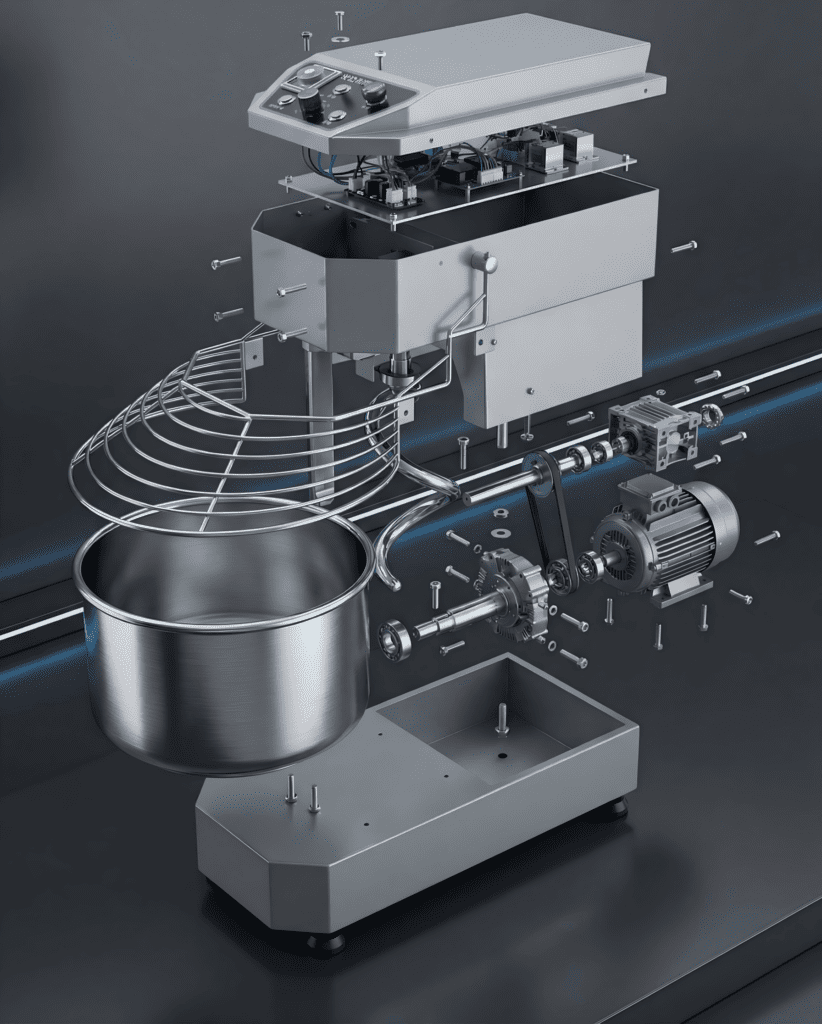
What Do the Inner Parts of a Dough Mixer Look Like?
Dough Mixer Parts and Functions
When sourcing equipment for a bakery, pizza shop, or food production facility, understanding the machinery you are investing in is crucial. A commercial dough mixer is the heart of any dough-based operation, but what exactly goes on inside this essential machine? For distributors and B2B buyers, knowing the inner workings is not just about technical knowledge—it is about identifying quality, durability, and the right supplier partnership.
This guide breaks down the dough mixer parts and functions, helping you understand what separates a reliable industrial dough mixer from an inferior alternative.
Dough Mixer Parts and Functions
To appreciate the value of a high-quality machine, one must first understand its core components. A standard dough mixer machine relies on several key parts working in perfect synchronization. The primary components include the motor, transmission system, mixing bowl, agitator (spiral, planetary, or hook), and the control panel.
The motor serves as the engine, providing the necessary torque to handle heavy dough batches. The transmission system, often comprising gears and belts, transfers this power to the agitator. For a bakery dough mixer, the consistency of the dough—whether it is stiff bread dough or soft cake batter—dictates the type of agitator used. Spiral mixers are preferred for bread due to their gentle yet thorough kneading, while planetary mixers offer versatility for various consistencies.
Key Components Inside a Commercial Dough Mixer
Distributors looking to partner with a dough mixer manufacturer should pay close attention to the inner structure of a dough mixer. Here are the critical elements that define performance and longevity:
1. The Gearbox and Drive System
The gearbox is the powerhouse of the machine. In a premium commercial dough mixer, you will find heavy-duty gears, often made of hardened steel, rather than cast iron or plastic. This ensures that the machine can run for extended hours without overheating or suffering from wear and tear. When evaluating a dough mixer supplier, inquire about the gear material and whether the drive system uses a belt or direct drive. Direct drive systems typically offer more consistent power and require less maintenance.
2. Bowl and Bowl-Truck Mechanism
For industrial dough mixer models, the bowl is not stationary. It often locks into place with a hydraulic or manual lift system. The safety interlocks are a vital inner part; these prevent the machine from operating when the bowl is not correctly secured or when the safety guard is lifted. This is a non-negotiable safety feature for any dough mixer machine used in a professional setting.
3. Agitator and Centering Mechanism
The agitator’s connection to the drive shaft must be precise. Any wobble or misalignment in the dough mixer components leads to uneven mixing and premature wear on the bearings. High-quality mixers feature a robust centering mechanism that keeps the agitator perfectly aligned with the bowl, ensuring every gram of dough is mixed uniformly.
Why the Inner Structure Matters for Distributors
For B2B buyers and distributors, understanding what are the inner parts of a dough mixer is essential for risk management. A machine with substandard internal components leads to frequent breakdowns, costly repairs, and unhappy end-users.
When you choose to work with a professional dough mixer manufacturer, you are ensuring that the internal components are designed for the rigors of daily use. Distributors should look for machines with:
- Stainless steel drive shafts to prevent rust.
- High-grade bearings that are sealed to keep out flour dust.
- Modular wiring for easy servicing and part replacement.
Selling a machine with high-quality internal parts reduces warranty claims and builds a reputation for reliability. This is why positioning yourself as a bakery equipment supplier who prioritizes engineering transparency is a powerful market differentiator.
How to Choose a Reliable Dough Mixer Supplier
Selecting the right manufacturing partner is as critical as selecting the right equipment. As you build your product catalog, consider the following factors to ensure you are sourcing from a trusted dough mixer supplier:
Manufacturing Standards
Does the supplier adhere to international safety and quality standards? Look for certifications such as CE, UL, or ISO. These indicate that the dough mixer factory follows strict quality control protocols, ensuring consistent production quality.
Customization Capabilities
Distributors often need to offer variations to meet local market demands. A partner offering dough mixer OEM manufacturer services can provide machines with specific voltage requirements, colors, or branding, allowing you to stand out in a competitive market.
After-Sales Support
A reliable dough mixer for distributors includes not just the product but also the supply chain for spare parts. Ensure that the manufacturer can provide diagrams of the dough mixer parts and functions for maintenance teams and that spare parts are readily available.
FAQ Section
What is the most important part of a dough mixer?
While all components are important, the gearbox and motor are the most critical. They determine the machine’s power, durability, and ability to handle heavy loads without overheating. A weak gearbox is the most common cause of failure in low-quality industrial dough mixer units.
How to choose a commercial dough mixer?
To choose the right commercial dough mixer, first determine the type of dough you will be mixing (bread requires a spiral mixer; cakes and creams require a planetary mixer). Second, consider the capacity. Measure your largest batch size to ensure the bowl volume is adequate. Finally, inspect the dough mixer components—look for all-metal gears and a robust motor for longevity.
What capacity dough mixer do I need?
Capacity depends on your production volume. For small bakeries, a 20-40 quart dough mixer machine may suffice. For industrial applications, you will need 60 quarts or more. Remember that dry flour capacity is different from total bowl volume; always check the manufacturer’s specification for maximum dough weight.
Spiral vs. Planetary Dough Mixer: Which is better?
A spiral mixer is superior for bread, pizza, and bagel dough because it mimics hand-kneading, developing gluten without overheating the dough. A planetary mixer is more versatile, suitable for batters, whipped creams, and lighter doughs, but it may struggle with stiff doughs for extended periods.


