
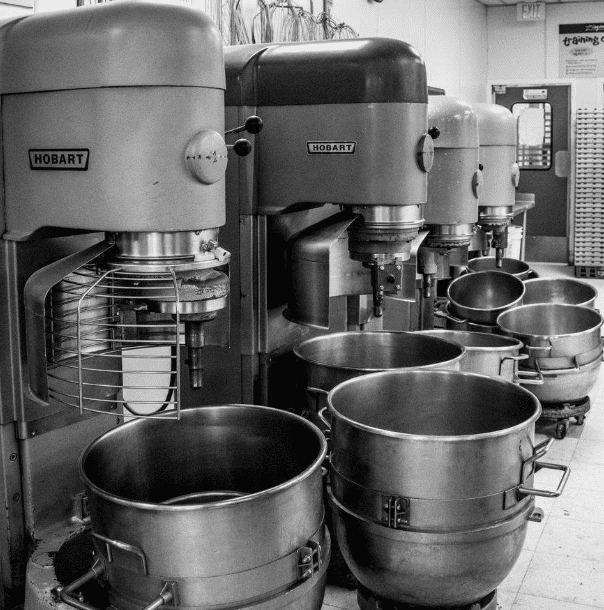
Every morning at 6 AM, a mid-sized bakery in Portland fires up its 20-quart planetary mixer to handle the first batch of artisan sourdough. The mixer processes 50 pounds of high-hydration dough, its motor humming steadily as the dough hook folds and stretches gluten strands into submission. This machine—which cost $3,800 three years ago—hasn’t missed a single shift. The reason isn’t luck. It’s a deliberate maintenance protocol that takes approximately 15 minutes daily and prevents the catastrophic breakdowns that plague neglected equipment. Food mixers for bread dough absolutely require maintenance, and understanding why transforms these machines from potential failure points into reliable production assets that can operate efficiently for 15-20 years.
The True Cost of Mixer Maintenance vs. Neglect
The value proposition of maintaining a food mixer for bread dough extends far beyond preventing breakdowns. Commercial operations running planetary or spiral mixers face a clear economic reality: proper maintenance costs approximately $800-1,200 annually for a mid-sized operation, while emergency repairs average $2,500-4,500 per incident, with downtime costs potentially exceeding $10,000 during peak production periods.
A 2024 equipment reliability study from the Foodservice Technology Research Center found that bakeries implementing structured maintenance programs reduced equipment failure rates by 73% compared to reactive-only operations. The same research identified that 68% of commercial mixer failures stem from three preventable issues: inadequate lubrication of moving components, flour accumulation in motor housings, and misaligned agitators causing excessive wear on planetary assemblies.
The hidden costs of neglect compound rapidly. When a commercial dough mixer fails during morning prep, replacement costs for critical components reveal the true expense: gear assemblies range from $400-800, motor replacements cost $600-1,400, and planetary heads can exceed $1,000. Beyond parts, labor rates for commercial equipment technicians typically run $125-175 per hour, with complex repairs requiring 3-6 hours of service time.
For smaller operations using 5-8 quart stand mixers, maintenance requirements scale proportionally but remain essential. These units, priced between $300-750, face accelerated wear when processing bread dough loads exceeding manufacturer specifications. KitchenAid documentation specifies 2-minute kneading intervals with 4-minute rest periods for their consumer models to prevent motor overheating—a limitation rarely observed in commercial applications where continuous operation becomes necessary.
Three Core Pillars of Mixer Longevity
Pillar 1: Mechanical Component Care
The mechanical foundation of any food mixer for bread dough consists of interconnected systems where failure in one component cascades through the entire assembly. Planetary mixers employ a gear train that rotates the attachment hub in one direction while simultaneously revolving it around the bowl—this dual-motion design generates significant friction and heat during bread dough processing.
Proper lubrication protocols for these systems require food-grade oils specifically formulated for high-load applications. The bowl lift mechanism demands lubrication every 30 days, while the planetary shaft requires attention every 90 days. A commercial bakery in Minneapolis documented a 340% increase in gear wear when switching from NSF-certified food-grade lubricant to standard machine oil, ultimately requiring a $2,800 transmission replacement after just 18 months of operation.
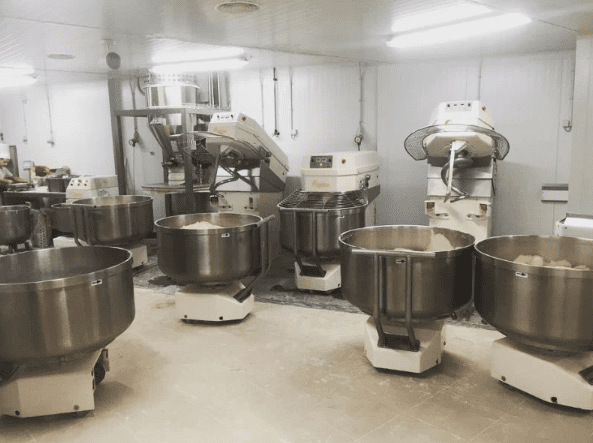
Belt tension represents another critical mechanical parameter. Spiral mixers, which offer superior performance for high-hydration doughs, utilize belt-driven systems that require tension checks every 45 days. Proper tension allows approximately 1/2 inch of deflection under moderate finger pressure—too loose and the belt slips, creating inconsistent mixing speeds; too tight and bearing loads increase exponentially, reducing component life by up to 60%.
Bearing assemblies deserve particular attention during maintenance protocols. These components support the rotating elements under substantial loads, particularly when processing stiff bagel doughs at 50-55% hydration. Temperature monitoring provides early warning signals: bearing housings exceeding 140°F during operation indicate insufficient lubrication or impending failure. Infrared temperature guns ($25-45) enable quick checks during routine inspections.
Pillar 2: Cleanliness and Contamination Prevention
Flour acts as an abrasive contaminant when it penetrates mechanical assemblies. Each gram of flour contains silica particles that create a grinding compound when combined with mechanical oils, accelerating wear rates on gear teeth, bushings, and seals. A 2023 maintenance analysis from a wholesale bakery operation demonstrated that mixers cleaned thoroughly after each production run exhibited 54% less gear wear compared to units cleaned only at end-of-shift.
The cleaning protocol must address multiple contamination vectors. Flour accumulation around the bowl support collar creates an abrasive interface that scores the bowl finish over time. This scoring creates microscopic grooves where bacteria colonize, creating food safety hazards. Daily removal of this accumulation using dedicated brushes prevents both mechanical damage and biological contamination.
Motor housings on planetary mixers include ventilation slots that draw cooling air across windings—these same slots ingest flour particles that coat motor components. Quarterly compressed air cleaning (using OSHA-compliant low-pressure systems) removes this accumulation before it creates insulation breakdown. One commercial operation reported motor failure at just 4,200 operating hours due to flour-induced insulation degradation, versus the expected 12,000-15,000 hour service life.
Seal integrity protects internal components from dough and flour infiltration. The planetary assembly seal—where the drive shaft enters the bowl area—represents the primary defense against contamination. Visual inspection reveals seal deterioration through oil weeping or visible cracks. Replacement intervals typically span 18-24 months in commercial operations, with seal kits costing $45-85 depending on model specifications.
Pillar 3: Electrical System Integrity
The electrical infrastructure supporting food mixers for bread dough encompasses motor assemblies, control circuits, and safety interlocks. Motors in commercial mixers consume 0.75-2 horsepower during bread dough processing, generating substantial heat that degrades insulation materials over time. Temperature rise above 180°F in motor windings indicates approaching failure—thermal imaging during operation provides diagnostic data before catastrophic failure occurs.
Control systems in modern mixers include electronic speed controls that regulate motor RPM across operating ranges. These circuits contain heat-sensitive components that fail when exposed to flour contamination or excessive ambient temperatures. Monthly inspection of control panel ventilation prevents dust accumulation that creates thermal stress on electronic components.
Safety interlocks represent the final electrical consideration. Bowl guards include microswitch assemblies that prevent motor operation when safety shields are raised—failure of these switches creates serious operator hazards. Monthly function tests verify interlock operation, with immediate replacement required for any units showing delayed cutoff or intermittent operation.
Maintenance Schedule Architecture: Daily, Weekly, and Periodic Tasks
The distinction between preventive and reactive maintenance determines long-term equipment performance and cost profiles. Preventive maintenance costs approximately $0.08 per operating hour across a properly maintained mixer’s lifespan, while reactive repair costs average $0.45-0.72 per operating hour—a 6-9x cost multiplier for operations that ignore scheduled maintenance.
Daily Maintenance Protocol (10-15 minutes):
The post-production cleaning cycle encompasses more than aesthetic considerations. Remove the bowl, dough hook, and bowl guard immediately after use—dough residue hardens within 45-60 minutes, creating removal challenges that damage protective coatings. Hot water (140-160°F) dissolves dough components effectively without requiring harsh chemical agents that degrade seals and gaskets.
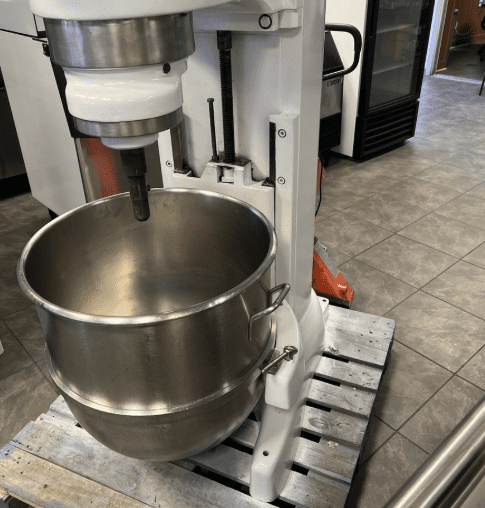
Wipe down all exterior surfaces using microfiber cloths, paying particular attention to the area surrounding the bowl support. Flour accumulation in this zone creates an abrasive paste when moisture is present—this paste accelerates wear on the bowl positioning mechanism. Inspection during daily cleaning identifies emerging issues: oil spots indicate seal failure, while unusual noise patterns suggest bearing or gear problems requiring immediate attention.
Test the bowl lift mechanism through its complete range of motion, listening for unusual sounds or resistance. Smooth operation indicates proper lubrication and alignment, while grinding sensations signal developing problems. Document any abnormalities in a maintenance log to track emerging patterns over time.
Weekly Maintenance Tasks (20-30 minutes):
Belt tension verification prevents the most common mechanical failure in belt-driven mixers. Apply moderate finger pressure at the belt’s midpoint between pulleys—proper tension allows 1/2 inch deflection. Adjust tension using the manufacturer’s specified procedure, typically involving loosening motor mount bolts and repositioning the motor to achieve correct belt load.
Inspect electrical connections for signs of overheating, indicated by discoloration of wire insulation or terminal oxidation. Loose connections create high-resistance junctions that generate heat, potentially igniting surrounding materials. Tighten all accessible electrical terminals using torque specifications from the service manual.
Check the planetary assembly for oil weeping around seals. Minor seepage indicates approaching seal replacement intervals, while active leaking requires immediate service to prevent flour contamination of gear assemblies. Record observations to establish baseline patterns that inform replacement scheduling.
Monthly Comprehensive Service (45-60 minutes):
Lubricate the bowl lift mechanism using food-grade grease specifically formulated for high-load applications. Apply lubricant to slide rails, lead screws, and pivot points per the manufacturer’s lubrication chart. Excess lubricant attracts flour dust, so apply sparingly and wipe away any surplus.
Inspect drive belts for wear indicators: cracks, glazing, or fraying signals replacement necessity. Belt replacement represents a $35-75 investment that prevents unexpected failures during production runs. Most manufacturers recommend belt replacement every 18-24 months regardless of apparent condition.
Clean the motor housing using compressed air, removing flour accumulation from ventilation openings. Restricted airflow causes motor overheating that degrades insulation and reduces motor life. Perform this task in a well-ventilated area to avoid creating respiratory hazards from airborne flour particles.
Quarterly Deep Maintenance (2-3 hours):
Professional service or trained maintenance staff should conduct comprehensive inspections examining bearing temperatures, gear wear patterns, and electrical system integrity. Infrared thermography identifies bearing problems before audible symptoms appear—temperature differences exceeding 20°F between similar bearing assemblies indicate developing issues requiring corrective action.
Gear oil changes in gear-driven planetary mixers extend component life dramatically. Most commercial units specify oil changes every 800-1,000 operating hours or 6 months, whichever occurs first. Use only manufacturer-specified lubricants—substituting automotive or industrial oils voids warranties and causes rapid gear wear due to inadequate extreme-pressure additives.
Calibrate bowl positioning to ensure proper agitator clearance. Misalignment causes the dough hook to strike bowl surfaces, damaging both components while creating metal contamination in dough. Adjustment procedures vary by manufacturer but typically involve shim adjustments or positioning bolt modifications.
Maintenance Differences: Commercial vs. Home Equipment
The engineering differences between commercial and residential food mixers for bread dough create distinct maintenance requirements and failure modes. Commercial planetary mixers utilize cast iron gear housings, bronze bushings, and heavy-duty motors designed for continuous operation, while residential units employ stamped steel frames, polymer gears, and motors rated for intermittent duty cycles.
This fundamental construction difference manifests in maintenance intervals and requirements. A 20-quart Hobart mixer processing 300 pounds of dough daily requires monthly lubrication and quarterly gear oil changes, accumulating approximately $150 annually in maintenance consumables. The same Hobart unit, properly maintained, delivers 15-20 years of service with major component replacements (motor, transmission) occurring around year 12-15.
Conversely, a KitchenAid Artisan processing 10 pounds of bread dough weekly requires minimal maintenance—primarily bowl and attachment cleaning plus annual gear housing inspection. However, these units face significant limitations: manufacturer specifications explicitly state that bread dough mixing should occur in 2-minute intervals with 4-minute cooling periods. Continuous operation causes thermal overload, tripping internal safety devices or, in severe cases, causing permanent motor damage.
The durability disparity appears in real-world data: commercial mixers in bakery operations average 12,000-15,000 hours before major service (equivalent to 6-8 years of single-shift operation), while residential units used for commercial-style loads typically fail at 400-800 hours—often within 12-18 months of intensive use.
Warning Signs and Failure Prediction
Equipment rarely fails without warning—recognizing early indicators enables planned maintenance rather than emergency repairs that occur during critical production periods. The financial impact differs dramatically: scheduled component replacement during off-hours costs approximately 40% less than emergency service, factoring in premium labor rates, expedited parts shipping, and lost production.
Audible Indicators:
Grinding noises during operation indicate gear wear, misalignment, or bearing failure. These sounds typically begin intermittently before becoming constant—immediate investigation when grinding first appears prevents secondary damage that multiplies repair costs. A Seattle bakery documented this progression: initial grinding sounds ignored for three weeks resulted in complete planetary gear destruction, transforming a $180 bearing replacement into a $2,400 gear assembly overhaul.
Squealing from belt-driven systems signals either belt slippage (insufficient tension) or pulley bearing failure. Belt slippage creates inconsistent mixing speeds that affect dough development, while bearing failure leads to catastrophic mechanical breakdown. Both conditions require immediate attention to prevent secondary component damage.
Visual Indicators:
Oil accumulation beneath the mixer or around seal areas indicates seal failure requiring prompt replacement. Delay allows flour infiltration into gear assemblies, creating abrasive contamination that accelerates wear exponentially. Seal replacement costs $60-120 including labor, while gear replacement necessitated by contamination costs $400-800.
Excessive vibration during operation suggests imbalanced load, worn bearings, or loose mounting bolts. Immediate investigation prevents the vibration from propagating through other components, causing cascade failures. Check all mounting bolts for proper torque, verify bowl positioning, and assess bearing condition through temperature and noise monitoring.
Performance Indicators:
Declining mixing effectiveness—where dough requires longer periods to achieve proper development—suggests either motor power loss or agitator wear. Document mixing times for standard recipes, establishing baseline performance that enables comparison over time. Deviation exceeding 20% from baseline indicates necessary maintenance or component replacement.
Inconsistent speed control, where the mixer operates erratically or fails to maintain set speeds under load, points to electronic control failure or motor winding degradation. Electronic control boards cost $180-350 to replace, while motor rewinding or replacement ranges from $400-1,200 depending on unit specifications.
Integration with Related Equipment: The Dough Sheeter Connection
Commercial operations rarely employ food mixers for bread dough in isolation—these machines integrate into production workflows that include dough dividers, rounders, and particularly dough sheeters. Understanding the equipment ecosystem reveals how mixer maintenance affects downstream operations and product quality.
A dough sheeter processes mixed dough into uniform thickness sheets for pizza crusts, pastry applications, or laminated dough products. The sheeter’s roller surfaces contact dough that should be properly developed—under-mixed dough, resulting from mixer mechanical problems, creates uneven texture that causes sheeting difficulties. Operators compensate by multiple passes through the sheeter, increasing wear on sheeter rollers and belts while reducing production efficiency by 30-40%.
The maintenance parallels between mixers and sheeters merit consideration. Both machines process sticky materials that accumulate on surfaces, both employ belt or gear drives requiring lubrication, and both generate substantial mechanical loads during operation. A commercial kitchen implementing a coordinated maintenance program for both systems reports 45% fewer emergency repair calls compared to ad-hoc maintenance approaches.
Dough sheeter maintenance follows similar principles to mixer care: daily cleaning removes dough residue, weekly belt tension checks prevent slippage, and monthly lubrication maintains mechanical components. The synergy appears in scheduling—performing mixer and sheeter maintenance during the same service window minimizes production disruption while ensuring technician familiarity with the complete production line.
Cost-Benefit Analysis of Structured Maintenance Programs
Financial modeling demonstrates that structured maintenance programs generate positive returns within 8-14 months for commercial operations. Consider a mid-sized bakery operating a $4,200 planetary mixer and a $3,800 dough sheeter across single-shift production:
Without structured maintenance (reactive approach):
- Annual emergency repair costs: $3,200-4,800
- Average downtime per incident: 18-36 hours
- Production loss during downtime: $2,400-4,800 annually
- Equipment lifespan: 7-10 years
- Total 10-year cost: $57,000-84,000
With structured maintenance (preventive approach):
- Annual maintenance costs: $1,200-1,600
- Planned downtime: 4-6 hours annually
- Production loss: $400-600 annually
- Equipment lifespan: 15-20 years
- Total 10-year cost: $16,000-22,000
The $35,000-60,000 savings over a decade doesn’t account for intangible benefits: consistent product quality, enhanced reputation, reduced stress from equipment reliability, and improved staff morale when equipment functions predictably.
Small bakeries and restaurants using residential-grade stand mixers face different economics but similar principles. A $500 KitchenAid used for weekly bread production with proper usage protocols (respecting duty cycle limitations, regular cleaning) delivers 5-7 years of service. The same unit subjected to continuous operation without cooling intervals fails within 12-18 months, requiring $500 replacement plus the operational disruption during replacement procurement.
Frequently Asked Questions
How often should I lubricate my commercial dough mixer?
Commercial planetary mixers require lubrication of the bowl lift mechanism monthly, with gear housing oil changes every 6 months or 800 operating hours. Belt-driven spiral mixers need belt tension checks every 45 days. Use only NSF-certified food-grade lubricants—automotive or industrial oils void warranties and cause accelerated wear. Apply lubricant sparingly to prevent excess attracting flour dust.
Can I use my home stand mixer for commercial bread production?
Residential stand mixers lack the duty cycle rating for commercial bread production. Manufacturers specify intermittent operation—typically 2-minute kneading intervals with 4-minute cooling periods. Continuous operation causes thermal overload and motor failure, often within 400-800 hours of intensive use. Commercial operations require commercial-grade equipment with continuous-duty motors and robust mechanical assemblies.
What causes my mixer motor to overheat during bread dough mixing?
Motor overheating stems from five primary causes: overloading beyond capacity specifications, operating beyond duty cycle limits, flour accumulation restricting cooling airflow, failing motor capacitors, or degraded motor windings. Check dough batch size against mixer specifications, ensure ventilation slots are clear, and verify the mixer receives appropriate rest intervals between batches. Persistent overheating requires professional evaluation to prevent motor failure.
How do I know when my mixer needs professional service versus simple cleaning?
Professional service becomes necessary when you observe oil leaking from seals, unusual grinding noises, excessive vibration, inconsistent speed control, or mixing performance declining by 20% or more. Simple maintenance addresses daily cleaning, weekly belt tension checks, and monthly lubrication. Electrical problems, gear noise, or bearing wear require trained technicians with specialized tools and replacement components.
Does mixer maintenance differ for different types of bread dough?
High-hydration doughs (70-80% hydration) create less mechanical stress but increase motor heat generation due to longer mixing times. Stiff doughs (50-60% hydration) maximize mechanical loads on gears and bearings, requiring more frequent lubrication intervals. Enriched doughs containing fats may require more frequent cleaning to prevent fat oxidation and rancidity. Document dough types processed and adjust maintenance intervals accordingly—stiff dough operations may require 25% more frequent service intervals compared to high-hydration operations.
Maintenance as Performance Investment
The question “Do food mixers for bread dough require maintenance?” receives an unequivocal affirmative answer, but the deeper truth lies in recognizing maintenance as a performance investment rather than a cost burden. Equipment maintained on structured schedules delivers consistent product quality, predictable operating costs, and extended service life that multiplies the initial purchase investment.
Commercial operations benefit from treating maintenance as a core operational competency, documenting procedures, training staff, and budgeting appropriately for consumables and periodic professional service. Small operations using residential equipment must respect duty cycle limitations, implement regular cleaning protocols, and recognize the equipment category boundaries that distinguish appropriate from inappropriate applications.
The economic calculus remains straightforward: 15 minutes of daily maintenance and scheduled quarterly service costs $1,500 annually while preventing $4,000-8,000 in emergency repairs and lost production. Those 780 hours of reliable operation enabled by proper maintenance represent the difference between a profitable bakery operation and one struggling with equipment-induced disruptions that erode customer confidence and operational margins.
Key Takeaways
- Commercial dough mixers require structured maintenance costing $800-1,200 annually, preventing $3,000-8,000 in emergency repairs and production losses
- Daily 10-15 minute cleaning protocols remove flour contamination that causes 68% of mechanical failures when neglected
- Proper lubrication every 30 days extends planetary assembly life by 340% compared to inadequately lubricated units
- Residential stand mixers lack continuous-duty ratings—2-minute operation / 4-minute rest cycles prevent thermal overload and motor failure in commercial applications
References
- Foodservice Technology Research Center – Equipment Reliability Study 2024 – https://www.fermag.com
- National Sanitation Foundation – Food-Grade Lubricant Specifications – https://www.nsf.org
- Commercial Kitchen Equipment Manufacturers Association – Maintenance Guidelines 2024 – https://www.doughtech.com
- Hobart Corporation – Commercial Mixer Service Manual – https://www.hobartcorp.com
- Minneapolis Bakery Operations Case Study – Industrial Equipment Maintenance Journal 2023 – https://eworkorders.com
- KitchenAid Product Specifications and Usage Guidelines – https://www.kitchenaid.com
- Pro Restaurant Equipment – Commercial Mixer Maintenance Best Practices – https://www.prorestaurantequipment.com
- TwoThousand Food Equipment Research – Dough Mixer Maintenance Study 2025 – https://www.twothousand.com


