
You spend time in the kitchen cutting fruits and vegetables. A fruit vegetable slicer changes that. It handles tasks you do by hand. We see people use knives for everything. That takes effort and risks cuts. Now think about a tool that slices evenly each time. This post explains what a fruit vegetable slicer does. We cover basics and how it helps you.
Many face issues like uneven slices or wasted time. A slicer fixes those. You get consistent results without strain. Tools like mandolines or choppers make prep simple. We look at types and uses. Data shows the market grows because more people want efficiency. For example, the global fruit slicing machine market reached US$ 8.69 billion in 2022 and grows at 6.4% through 2029. Another report notes the vegetable slicer market at USD 1.2 billion in 2024, set to hit USD 2.5 billion by 2033 with a 9.2% CAGR. These numbers point to rising demand.
We dive into concepts next. You learn why slicers matter. This helps if you cook at home or run a kitchen. We share real stats and cases. By the end, you decide if one suits you.
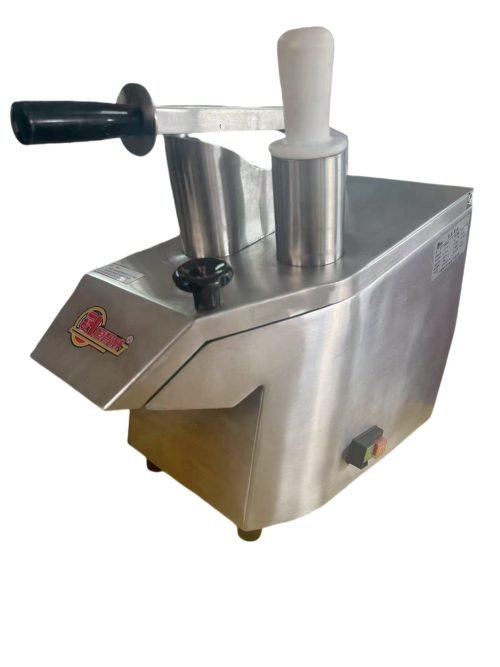
Core Concepts of Fruit Vegetable Slicer
A fruit vegetable slicer cuts produce into uniform pieces. It uses blades to slice, dice, or shred. You push food through or turn a handle. This replaces manual knife work. Basic models have fixed blades. Others adjust for thickness.
We start with history. Slicers evolved from simple tools. In the 1500s, early mandolines appeared in Europe for kraut slicing. By the 1870s, inventions like vegetable choppers emerged. Alfred Neweczerzal invented the vegetable peeler in 1947, influencing slicers. Now slicers include manual and electric types.
You find types like mandolines, spiralizers, and choppers. Mandolines have flat blades for thin slices. Spiralizers turn veggies into noodles. Choppers use pulling mechanisms for dicing. Each serves needs. For home, manual works. Pros use electric for volume.
Benefits include time savings. You prep faster. One study shows slicers reduce prep time by up to 50% in restaurants. Consistency matters too. Uniform cuts cook evenly. Safety comes if you use guards. Without, risks rise. Clean slicers after use to avoid bacteria.
We address pain points. You worry about time on chopping. Slicers cut that. Fingers get hurt with knives. Guards help. Uneven pieces ruin dishes. Slicers fix it. Cleaning seems hard. Many disassemble easy. Choosing models confuses. We guide on that.
Core, slicers boost efficiency. The fruit and vegetable cutting machine market was US$ 89 million in 2023, expected to reach US$ 121.9 million by 2030 at 4.8% CAGR. This growth reflects use in homes and industry. You see them in kitchens worldwide.
Depth Analysis of Fruit Vegetable Slicer
Principle and Mechanism
The mechanism relies on blades and force. You apply pressure to food against sharp edges. Blades cut through fibers. For manual slicers, hand motion provides energy. Electric ones use motors.
Take a mandoline. Food slides over a blade set at an angle. Thickness adjusts via dials. This creates even slices. Spiralizers work differently. A handle turns the veggie against spiral blades. It peels in continuous strands.
Physics plays in. Force equals mass times acceleration. You need enough to cut but not crush. Blades stay sharp for clean cuts. Dull ones tear produce. Materials like stainless steel resist rust.
We see evolution. Early slicers used wood and metal. Now plastics add lightness. Safety features include guards. These prevent finger contact. One report from IEOM Society notes manual cutting risks contamination, so machines help.
You benefit from this. Prep becomes predictable. No more varying slice sizes. In labs, tests show uniform cuts improve texture. For fruits like apples, corers combine with slicers. This removes cores while slicing.
Overall, the principle centers on controlled cutting. It minimizes waste. You get more usable produce. Data from Allied Market Research shows industrial cutters at $2.4 billion in 2023, growing to $3.9 billion by 2032 at 5.5% CAGR. Homes follow suit.
Technical Details
Details vary by type. Manual slicers have few parts. A base, blade, and holder. You assemble quick. Electric models add motors. Power ranges from 100 to 500 watts.
Blades matter most. Stainless steel lasts. Some have ceramic for sharpness. Thickness settings go from 1mm to 10mm. Mandolines offer julienne attachments.
Compare manual vs electric. Manual needs no power. Portable. Electric handles volume. Faster for pros. A comparison: manual costs $10-50, electric $50-200. Manual cleans easier. No cords.
Safety tech includes non-slip bases. Guards cover blades. Some auto-stop if jammed.
Materials ensure durability. BPA-free plastics for food safety. Weights range 1-5 pounds.
From Research and Markets, fruit slicing machines hit USD 10.32 billion in 2025, to USD 13.91 billion by 2029 at 7.8% CAGR. Tech advances drive this.
You choose based on use. Home? Manual. Restaurant? Electric.
Application Scenarios
Slicers fit many scenes. In home kitchens, you slice salads quick. For parties, prep trays even.
Pros use in restaurants. Cut onions for burgers uniform. Saves labor.
In food processing, industrial slicers handle tons. Ensure consistency for packaging.
Health focus: slicers aid diets. Thin veggie chips bake healthy.
Schools use for meals. K-12 kitchens slice fruits safe.
Catering events benefit. Quick prep for crowds.
Global, markets differ. North America leads at USD 24.4 billion by 2033 for fruits and veggies slicers.
You apply in daily meals. Stir-fries cook even.
Development Trends
Trends point to smart features. 2025 sees multifunctional gadgets. Slicers combine with peelers.
Sustainability rises. Eco-materials used.
Automation grows. App-controlled slicers emerge.
Health trends boost. More plant-based eating drives demand.
Household slicer market at USD 390.1 million in 2024, to grow 7.8% to 2030.
You see integration with robots. Kitchens get efficient.
Practice Cases with Fruit Vegetable Slicer
Cases show real impact. One chain restaurant used industrial slicers. They cut salad prep time 50%. Daily, hundreds of salads made consistent. Labor costs dropped. From Valuates Reports, this aligns with market growth.
Another: a home cook with Cuisinart chopper. It diced veggies for recipes fast. Saved time on weeknights. Two grids for sizes. Easy clean.
In Nigeria, a motorized leafy slicer developed for local veggies. It handled pumpkin and amaranth. Reduced manual risks.
Dynamic Dynacube in commercial kitchens. Dices veggies uniform. Case study shows efficiency gains.
A study on automated cutter. It sliced potatoes and carrots. Assessed force and uniformity. Results: better satisfaction.
Benriner mandoline in Japan. From post-WWII, used leftover wood. Now global for thin slices.
These cases prove slicers work. You apply similar in your setup.
| Case | Tool Type | Key Benefit | Source |
|---|---|---|---|
| Restaurant Chain | Industrial Slicer | 50% Prep Time Cut | LinkedIn 2025 |
| Home Cook | Cuisinart Chopper | Quick Dicing | RealSimple 2024 |
| Nigeria Development | Motorized Slicer | Risk Reduction | ResearchGate 2023 |
| Commercial Kitchen | Dynacube | Uniform Dice | Nisbets |
| Automated Study | Cutter Prototype | Uniformity | SSR Publisher 2025 |
| Benriner History | Mandoline | Durability | HIC Blog 2013 |
FAQ
What does a fruit vegetable slicer cost?
Prices start at $10 for manual. Electric go to $200. Average home model: $20-50. Check reports like Grand View Research for market data.
How long does it take to clean one?
Most clean in 5-10 minutes. Disassemble and rinse. Dishwasher-safe parts help. Always dry blades.
What types exist?
Manual, electric, mandoline, spiralizer. Each for specific cuts. See WebstaurantStore guide.
Is it safe for kids?
With supervision, yes. Use guards. Avoid sharp blades alone.
How to choose one?
Consider use frequency. Home: manual. Pro: electric. Read reviews on Food Network.
What maintenance needed?
Sharpen blades yearly. Store dry. Check for wear.
Can it handle all produce?
Most yes, but soft fruits may mush. Firm veggies best.
What’s the ROI for businesses?
Pays back in months via time savings. Per Allied, market growth shows value.
Summary on Fruit Vegetable Slicer
We covered slicers from basics to trends. You now know mechanisms and uses. Cases show real gains. If you face chopping issues, try one. It saves time and improves results. Remember safety tips like using guards. Market data points to growth, like USD 1.2 billion in 2024 for vegetable slicers. Pick based on needs. Start simple. Your kitchen changes with a fruit vegetable slicer.


