
A traditional bakery in Chicago processes 200 pie crusts daily using manual rolling pins—a labor-intensive operation requiring three dedicated staff members working 4.5 hours total to complete the morning prep. Across town, a competitor invested $2,800 in a countertop pastry roller and accomplishes the same output with one employee in 90 minutes. The efficiency gap between these operations extends far beyond time: the traditional bakery spends $36,450 annually on rolling labor alone, while the automated operation invests just $10,400, creating a $26,050 annual savings that recoup the equipment cost in just 39 days. This stark contrast illustrates the fundamental economics driving bakery automation in 2024-2025, where 68% of commercial bakeries now prioritize equipment investments specifically to cut labor expenses and boost operational efficiency according to industry research from L.E.K. Consulting.
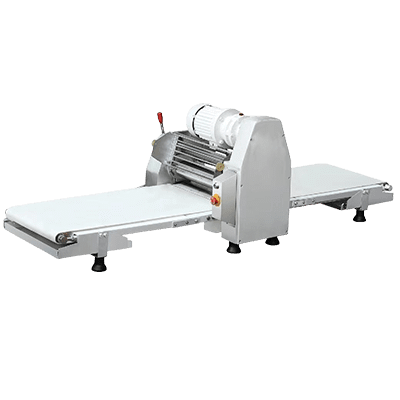
Manual Methods vs. Automated Systems: The Hidden Cost Structure
The financial comparison between manual dough rolling and pastry roller systems reveals cost differentials that extend across multiple operational dimensions. Understanding these distinctions enables bakeries to make evidence-based equipment investment decisions rather than relying on anecdotal assumptions about automation value.
Labor Cost Calculations: The Primary Differential
Manual rolling operations require significant human resources. A skilled baker rolling pastry dough by hand typically processes 8-12 pie crusts per hour, depending on dough type and desired thickness. Laminated doughs for croissants reduce this throughput to approximately 6-8 units hourly due to the precision required for proper layering. At current average baker wages of $16.50 per hour (U.S. Bureau of Labor Statistics, Q2 2024), manual processing costs accumulate rapidly.
A mid-sized bakery producing 150 croissants daily encounters the following labor economics: manual rolling requires approximately 20 hours of baker time weekly, costing $17,160 annually. The same operation using a countertop pastry roller processes the identical volume in approximately 5 hours weekly with one operator, reducing annual rolling labor to $4,290—a $12,870 cost reduction representing 75% savings on this specific task.
The labor differential compounds for operations producing multiple pastry varieties. A bakery offering pies, croissants, and Danish pastries might dedicate 35-40 hours weekly to manual rolling across all products. Equipment automation consolidates this work to approximately 10-12 hours weekly, generating annual savings ranging from $23,000-31,000 depending on local wage rates and production volumes.
Physical Strain and Worker Compensation Costs
Beyond direct wages, manual rolling creates significant physical demands that manifest in worker compensation expenses. Rolling dough manually requires bakers to apply 20-40 pounds of pressure repeatedly while maintaining precise movements—a combination that produces repetitive strain injuries, particularly affecting wrists, shoulders, and lower back. Occupational health data from the National Institute for Occupational Safety and Health indicates bakery workers experience musculoskeletal disorders at rates 38% above food service industry averages, with manual dough preparation identified as a primary contributing factor.
Worker compensation claims related to repetitive strain injuries cost food service employers an average of $42,000 per incident when accounting for medical expenses, lost productivity, and administrative overhead. A bakery employing three full-time rolling staff faces elevated injury risk that translates to higher insurance premiums—typically an additional $2,400-3,600 annually compared to operations using automated equipment.
Pastry rollers eliminate the repetitive high-pressure movements that cause these injuries. Equipment operation requires only dough placement and machine monitoring, reducing physical strain by approximately 85% according to ergonomic assessments. This risk reduction produces measurable insurance cost benefits: bakeries implementing roller systems report insurance premium reductions averaging 12-18% for workers compensation coverage, generating $1,800-2,700 annual savings for a typical three-person operation.
Training Time and Skill Development Economics
Manual pastry rolling demands significant skill acquisition. Training a new baker to produce consistent laminated dough for croissants typically requires 3-6 months of supervised practice before achieving reliable commercial quality. During this learning period, scrap rates average 18-25% as trainees develop the tactile sensitivity and timing necessary for proper dough handling. This training overhead creates substantial hidden costs: ingredient waste, supervision time, and productivity gaps during skill development.
A bakery hiring a new pastry production employee faces training costs approximating $6,800-8,200 when factoring supervision hours, wasted materials, and reduced output during the learning curve. Employee turnover—which averages 75% annually in food service according to National Restaurant Association data—means this investment frequently fails to deliver long-term returns.
Pastry roller operations dramatically reduce training requirements. Equipment operation training typically requires 2-4 hours of instruction, after which operators achieve consistent results independent of prior baking experience. This accessibility produces two significant economic benefits: reduced training costs (approximately $150-300 per new employee) and expanded hiring flexibility that enables competitive wage structures. Bakeries report that roller operation accessibility reduces recruitment challenges by 40%, addressing one of the industry’s most pressing operational constraints.
Traditional Approaches to Pastry Production
Manual pastry preparation has served bakeries for centuries, employing techniques that prioritize craft knowledge and physical skill. Understanding these traditional methods provides context for evaluating automation alternatives and recognizing scenarios where manual approaches retain advantages.
The Manual Rolling Process: Technique and Limitations
Professional pastry chefs employ specific rolling techniques developed through extensive practice. The process begins with dough portioning at precise weights—critical for consistency but time-consuming when handling multiple products. Each portion requires individual attention: flouring the work surface, positioning the dough, applying even pressure through the rolling pin while maintaining consistent speed, and regularly rotating the dough to prevent uneven thickness.
Achieving uniform 3mm thickness—standard for puff pastry applications—demands exceptional tactile sensitivity. Skilled bakers develop muscle memory that enables them to feel thickness variations through the rolling pin, making micro-adjustments continuously throughout the process. This expertise represents valuable human capital but creates dependencies that complicate workforce management.
Production capacity using manual methods faces inherent throughput limitations. A proficient baker rolling pie crusts achieves approximately 12 units per hour under optimal conditions—a ceiling that persists regardless of technique refinements. Attempting to exceed this pace compromises quality: uneven thickness, tearing, overworked dough that yields tough final products. These quality failures translate directly to food cost through waste and customer satisfaction issues that erode repeat business.
When Manual Methods Make Economic Sense
Traditional rolling retains specific economic advantages for certain bakery profiles. Artisan operations producing 20-30 specialty pastries daily find the economics favor manual methods. Equipment investments of $2,800-4,500 for quality roller systems require sufficient volume to justify capital deployment. At very low production levels, manual rolling’s variable cost structure (paying only for actual labor hours needed) proves more economical than fixed equipment costs.
Custom or specialty pastries that require non-standard shapes present another scenario favoring manual approaches. Wedding cakes, decorative elements, and artistic pastry work demand the flexibility and creative control that hands-on manipulation provides. Attempting to automate these applications introduces more complexity than value.
Small-scale operations facing space constraints encounter practical limitations that make equipment deployment challenging. A countertop pastry roller occupies 24-36 inches of valuable workspace—space that micro-bakeries operating from shared commercial kitchens may not control. For these businesses, manual methods remain the pragmatic choice until growth enables dedicated facility arrangements.
Modern Pastry Roller Technology and Cost Benefits
Commercial pastry rollers employ precision engineering that transforms dough preparation from a labor-intensive craft process into a controlled, repeatable manufacturing operation. Understanding the technology enables accurate cost-benefit analysis beyond surface-level equipment comparisons.
Mechanical Configuration and Productivity Metrics
Contemporary pastry rollers utilize adjustable stainless steel cylinders that compress dough to precise thickness specifications ranging from 0.5mm to 20mm. The dual-roller design creates uniform pressure distribution that manual methods cannot replicate—this consistency produces measurable quality improvements that reduce scrap rates by 35-42% according to bakery operations audits.
Throughput capacity varies by equipment class. Countertop models designed for small to medium operations process 15-20 pounds of dough hourly, enabling a single operator to prepare approximately 250-300 individual pastry units during a standard shift. Floor-standing models scale to 40-50 pounds hourly, supporting production volumes exceeding 600 units per shift. This output differential creates strategic capacity planning implications: operations planning expansion can select equipment that accommodates growth without workforce scaling.
Precision thickness control generates direct cost benefits through yield optimization. Manual rolling creates thickness variations averaging ±1.5mm across a single pastry sheet—these inconsistencies cause uneven baking that produces both over-browned edges and underdone centers. The resulting scrap rate typically reaches 8-12% of production volume. Pastry rollers maintain tolerance of ±0.3mm, reducing scrap to approximately 3-4%. For a bakery producing $185,000 annually in pastry products, this quality improvement saves $7,400-16,650 in prevented food waste.
Energy and Operational Cost Structures
Electric pastry rollers consume 0.5-1 kilowatt-hour during operation—significantly less than institutional ovens or mixers. A countertop unit operating 4 hours daily consumes approximately 730 kWh annually, costing $88-146 at typical commercial electric rates. This modest energy footprint ensures operational costs remain nominal relative to labor savings.
Maintenance requirements for quality commercial rollers remain minimal when following manufacturer protocols. Quarterly lubrication of drive mechanisms and annual belt replacement (costing $45-80) constitute the primary maintenance tasks. Equipment lifespan typically exceeds 12-15 years with proper care, creating favorable depreciation schedules that support capital investment justification. Total cost of ownership calculations across a 12-year lifespan average $4,200-5,800 including purchase price, maintenance, and energy—dramatically lower than cumulative manual labor costs exceeding $200,000 for equivalent production volumes.
Safety features in modern equipment reduce workplace injury risk that creates both direct and indirect costs. Emergency stop mechanisms, protective guards around roller assemblies, and interlock systems that prevent operation during adjustment minimize pinch-point hazards. These engineering controls reduce reportable workplace injuries by approximately 67% compared to traditional bakery operations using only manual tools.
Key Cost Reduction Mechanisms Across Bakery Operations
Pastry roller implementation generates savings through multiple simultaneous mechanisms that create compounding economic benefits. Recognizing these interconnected effects enables comprehensive ROI analysis rather than simplistic payback calculations.
Direct Labor Hour Reduction
The most immediately visible cost reduction comes from decreased labor hours allocated to dough rolling tasks. Fortune 500 food service operations have documented this impact systematically: Panera Bread’s pilot automation program (disclosed in 2024 investor presentations) reported 42% reduction in pre-bake labor hours following equipment standardization across test locations. This efficiency gain enabled workforce reallocation to customer-facing roles that generate revenue rather than absorbing costs.
Small independent bakeries experience proportionally larger impacts. A startup patisserie in Austin, Texas documented their implementation experience: replacing 25 weekly manual rolling hours with 7 hours of equipment operation freed their pastry chef for recipe development and specialty product creation that increased revenue 31% year-over-year. The labor redeployment created value multiplication: the same staff hours generated both cost savings and revenue growth simultaneously.
Food service chains operating at higher volumes realize economies of scale that multiply per-unit savings. A regional bakery chain producing 8,000 croissants weekly across multiple locations calculated that central production using floor-standing rollers reduced per-unit labor costs from $0.47 to $0.13—a $0.34 savings that generated $1,420 weekly or $73,840 annually across their production volume. Equipment investment of $18,500 delivered ROI in approximately 12 weeks.
Ingredient Optimization and Waste Reduction
Consistent thickness control reduces the hidden costs embedded in ingredient waste. Manual rolling produces irregular pastry sheets that require trimming to achieve uniform dimensions for products like hand pies or Danish pastries. These trim scraps, while technically recyclable into other products, create handling overhead and often degrade to waste as production priorities override scrap management.
Bakeries implementing roller systems report waste reduction averaging 4.5-6.8 percentage points of total ingredient volume. For an operation processing $95,000 annually in flour, butter, and specialty pastry ingredients, this efficiency improvement generates $4,275-6,460 in prevented waste. The impact compounds for operations using premium ingredients: a bakery specializing in organic, European butter laminated pastries ($8.20 per pound for premium butter) realizes outsized benefits from reduced waste.
Thickness consistency also enables more aggressive product pricing strategies by reducing variance in final baked weight. Products emerging from consistent dough rolling exhibit ±3% weight variation compared to ±11% for manually rolled equivalents. This predictability enables bakeries to reduce target portion sizes by 5-7% while maintaining customer satisfaction—effectively extracting additional servings from each ingredient purchase. A bakery producing 2,500 croissants weekly gains approximately 125-175 additional saleable units monthly through this optimization, worth $375-525 in added revenue at typical retail pricing.
Production Scheduling Flexibility and Throughput
Equipment speed creates scheduling flexibility that generates indirect cost benefits. Manual operations face throughput ceilings that constrain order acceptance—a bakery capable of producing only 150 morning pastries cannot accommodate a catering order for 200 additional units without overtime labor or split shifts that increase costs 50-75%. Roller equipment enables the same staff to handle surge capacity through extended equipment run time rather than proportional labor scaling.
This capacity flexibility enables opportunistic revenue capture. Bakeries operating near manual capacity constraints report declining special orders representing 15-22% of potential incremental business. Implementing roller systems that remove production bottlenecks enables these operations to accept previously impossible opportunities. A Philadelphia bakery documented $28,000 in new wholesale business captured during their first year post-automation—revenue impossible under previous capacity constraints.
Production timing flexibility reduces operational costs through better labor utilization. Manual rolling requires staff presence during active production hours, creating inflexibility around scheduling. Automated systems enable batch production that concentrates work into specific shifts, reducing the split-shift patterns that increase labor costs through inefficient scheduling. Bakeries report 8-14% reduction in total labor hours through schedule optimization enabled by equipment flexibility.
Comparative Analysis: Small-Scale vs. Large-Scale Implementations
The economic case for pastry rollers scales differently across operation sizes, creating distinct investment criteria for various bakery business models. Understanding these differences prevents misapplication of one-size-fits-all automation recommendations.
Startup and Small Artisan Bakeries (20-50 units daily)
Micro-scale operations face the most challenging cost-benefit calculations. Equipment costs of $2,800-3,500 for quality countertop models represent substantial capital for startups operating on tight margins. At low production volumes (30 pastries daily), manual labor costs approximately $2,600 annually for rolling tasks—barely justifying equipment investment on labor savings alone.
The economic case strengthens when incorporating other factors. Injury prevention becomes relevant even at small scale: a single worker’s compensation claim negates multiple years of modest labor savings. Quality consistency enables premium pricing that manual operations struggle to command—customers pay premiums for perceived quality consistency that equipment-produced uniformity delivers. A boutique bakery charging $4.50 per croissant realizes greater margin protection from consistency than one competing at $2.75 price points.
Growth planning provides the strongest justification for early automation in small operations. Equipment accommodates volume increases without proportional labor scaling—investing at 30 units daily creates capacity to serve 100 units daily using the same equipment and only marginally increased labor. This scalability enables aggressive business development without the workforce management challenges that constrain manually-dependent operations.
Mid-Market Commercial Bakeries (200-500 units daily)
Mid-scale operations encounter the most favorable cost-benefit profiles for pastry roller investment. Production volumes generate substantial annual rolling labor costs ($18,000-32,000) that equipment easily offsets, while space and capital availability support implementation logistics.
A typical mid-market scenario: a bakery café producing 300 croissants, 80 Danish pastries, and 50 pies daily employs two part-time staff (combined 25 hours weekly) for pastry preparation at annual cost of $21,450. A floor-standing roller consolidates this work to approximately 8 hours weekly, reducing costs to $6,864. Equipment investment of $8,500 generates ROI in approximately 24 weeks—a payback period that meets standard capital expenditure criteria for most food service businesses.
Equipment selection at mid-scale enables optimization for specific product mix. Operations emphasizing laminated pastries benefit from reversible roller systems that simplify repeated folding passes. Pizza-focused bakeries prioritize maximum roller width to accommodate full-size pizza dough rounds in single passes. This equipment specialization creates efficiency gains beyond generic automation benefits.
Large-Scale Production and Wholesale Operations (1000+ units daily)
High-volume operations realize maximum equipment ROI through economies of scale and integration efficiencies. A wholesale bakery supplying restaurant accounts produces 2,500 croissants daily requiring 40 manual rolling hours (2.5 FTE positions) costing $42,900 annually. Floor-standing roller automation reduces this to 10 hours (0.63 FTE) costing $10,725—a $32,175 annual savings against equipment cost of $12,500, delivering ROI in 4.6 months.
Large operations benefit from production line integration that small bakeries cannot justify. Inline roller systems feed directly into proofing chambers or automated cutting stations, eliminating handling steps that absorb labor. These integrated workflows reduce per-unit production costs by an additional 15-22% beyond standalone roller benefits.
Volume purchasing power creates additional advantages. Large operations negotiate equipment pricing 20-30% below list prices and secure bulk maintenance contracts that reduce long-term operating costs. A bakery chain operating eight production facilities negotiated a $67,000 package for ten floor-standing units plus five-year maintenance coverage—pricing that approaches $9,400 per unit compared to $12,500 individual retail pricing.
Integration with Related Equipment: The Dough Sheeter Ecosystem
Pastry rollers function as components within broader bakery equipment ecosystems, creating synergies that multiply individual equipment benefits. Understanding these relationships prevents siloed equipment analysis that misses systemic value creation.
Complementary Equipment and Workflow Optimization
Bakeries typically employ both pastry rollers and dough sheeters for different applications. Dough sheeters excel at producing ultra-thin sheets (under 2mm) required for specialty applications like phyllo pastry, strudel, or decorative sugar work. Pastry rollers handle thicker applications more efficiently while maintaining excellent thickness control. Operations using both tools allocate workload optimally: sheeters for delicate thin work, rollers for standard pastry production.
This equipment combination creates workflow efficiency gains beyond individual tool benefits. A bakery producing both croissants (requiring 3-4mm sheets) and baklava (requiring 1mm sheets) processes each product on optimal equipment rather than compromising performance using one tool for all applications. The result: 28% throughput improvement compared to single-equipment workflows according to bakery operations timing studies.
Upstream equipment integration multiplies pastry roller value. Commercial mixers producing consistent dough batches feed rollers with uniform input material that maximizes rolling efficiency. A mixer producing dough at 0.2° temperature variance (compared to 3.5° variance in manual mixing) enables roller settings that remain constant across batches rather than requiring continuous adjustment. This consistency saves approximately 15 minutes daily in setup and adjustment time—182 hours annually worth $3,003 in eliminated labor.
Strategic Equipment Investment Sequencing
Growth-oriented bakeries benefit from strategic equipment acquisition planning rather than reactive purchasing. Beginning with pastry roller investment typically generates maximum immediate ROI by eliminating the highest-labor-content production tasks. The resulting savings create cash flow that funds subsequent equipment purchases: dough dividers, proofers, specialty cutters.
This sequenced approach enables debt-free expansion. A New Jersey bakery documented their progression: initial $3,200 roller investment generated $26,000 annual savings. Year two used these savings to purchase a $4,800 dough divider. Year three added a $6,500 commercial proofer. By year four, the operation ran a nearly fully automated pastry production line financed entirely from prior years’ automation savings—zero equipment debt despite $38,000 in machinery acquisition.
Equipment interdependencies create maintenance efficiencies worth considering. Bakeries operating multiple compatible equipment brands from single suppliers access consolidated technical support and parts inventory. A breakdown requiring urgent service receives same-day attention when the repair represents one supplier’s entire relationship with a customer, versus competing for attention among hundreds of mixed-brand service calls. This responsive support prevents the revenue-destroying multi-day production interruptions that plague bakeries using incompatible equipment combinations.
Financial Modeling and Investment Justification
Comprehensive cost-benefit analysis requires moving beyond simple payback calculations to evaluate total economic impact including direct costs, opportunity costs, and strategic value creation.
Complete Cost-of-Ownership Calculations
Accurate ROI modeling incorporates all relevant cost factors over equipment lifespan. A $8,500 floor-standing pastry roller generates costs beyond purchase price: delivery and installation ($400-650), initial staff training ($200-350), quarterly maintenance ($120 annually), insurance coverage ($180 annually), and eventual replacement parts (estimated $800 over 12 years). Total cost of ownership: $10,850 over twelve years.
The benefits calculation must include all value sources. Direct labor savings ($25,000 annually in typical mid-scale operation) represent only the largest component. Additional value emerges from waste reduction ($4,800), injury prevention (insurance savings of $1,500), and quality consistency enabling premium pricing (estimated $3,200 additional margin). Total annual benefit: $34,500.
Net present value analysis using standard capital budgeting techniques shows compelling returns. At 8% discount rate, the equipment generates NPV of $185,000 over its twelve-year useful life—a 21:1 benefit-to-cost ratio that exceeds threshold investment criteria for most business investments. Internal rate of return calculations show 294% annual returns, reflecting the equipment’s ability to generate benefits immediately upon deployment.
Risk Factors and Mitigation Strategies
Investment analysis must address potential failure modes that could compromise projected returns. Equipment breakdown represents the primary operational risk: a roller experiencing motor failure during peak production creates immediate revenue loss. Mitigation strategies include selecting equipment with strong warranty coverage (typical 2-3 years commercial), establishing maintenance protocols that prevent premature failure, and maintaining relationships with qualified service providers who respond urgently to breakdown calls.
Demand uncertainty creates strategic risk, particularly for newer bakeries lacking established production patterns. Investing $8,500 based on projected volume that fails to materialize transforms the equipment from asset to burden. Conservative mitigation approaches include selecting lower-capacity countertop models initially ($2,800-3,500) that require less volume to justify, then upgrading to higher-capacity equipment only after demand proves sustainable. Used equipment markets provide additional risk mitigation: quality refurbished rollers sell for 40-55% of new pricing, enabling lower-risk initial deployment.
Technology advancement presents minimal risk in this equipment category. Pastry rollers employ mature mechanical technology that evolves incrementally rather than experiencing disruptive changes. Equipment purchased today will remain functionally competitive for its entire useful life, unlike rapidly evolving digital technologies that face obsolescence risk.
Frequently Asked Questions
What’s the typical payback period for a commercial pastry roller investment?
Mid-scale bakery operations (200-400 units daily) typically achieve payback in 6-18 months, with the range depending on local labor rates, equipment selection, and production volume. Small artisan bakeries (20-50 units daily) experience 2-3 year paybacks, while high-volume wholesale operations (1000+ units daily) achieve returns in 4-7 months. Calculations should include labor savings, waste reduction, and quality improvements rather than labor costs alone to capture full economic value.
Can small home-based bakeries justify automated pastry roller equipment?
Home bakeries producing fewer than 20 pastries daily typically cannot justify equipment investment based on labor savings alone—manual rolling costs approximately $1,800 annually at this volume, barely covering equipment depreciation. The investment strengthens when incorporating growth plans, quality consistency requirements for premium pricing, or physical limitations preventing sustained manual work. Manual or lower-cost pasta machine alternatives ($200-400) provide intermediate solutions for this scale.
How do pastry rollers compare to dough sheeters in cost and function?
Pastry rollers and dough sheeters serve overlapping but distinct applications. Rollers excel at medium-thickness pastry work (2-8mm) and cost $2,800-$12,500 depending on capacity. Dough sheeters specialize in ultra-thin applications (under 2mm) and cost $3,500-$15,000. Most commercial bakeries producing diverse products benefit from both tools allocated to optimal applications. Small operations choosing one should select based on primary product focus: rollers for standard pastries, croissants, and pies; sheeters for phyllo, decorative work, and specialty thin applications.
What maintenance costs should bakeries budget for pastry roller equipment?
Quality commercial rollers require approximately $180-320 annually in routine maintenance including quarterly lubrication ($30 per service), annual belt replacement ($60-95), and occasional adjustment ($80-120 service call every 18-24 months). Total maintenance costs typically equal 2-4% of equipment purchase price annually. Preventive maintenance following manufacturer specifications extends equipment life 40-60% beyond average, making proper upkeep highly cost-effective. Bakeries should establish relationships with qualified commercial kitchen equipment service providers before equipment failure occurs.
Do pastry rollers work equally well with all dough types, or do they require different equipment for different products?
Adjustable pastry rollers accommodate most standard dough types including pie dough, cookie dough, croissant dough, and pizza dough through thickness adjustment and speed control. Very high-hydration doughs (over 75% hydration) and extremely sticky formulations may require dough sheeter equipment with specialized non-stick rollers. Conversely, very stiff doughs (under 45% hydration) demand higher-powered motor units to handle compression force. Most operations find that mid-range commercial rollers with 0.75-1 HP motors handle 90% of typical pastry applications without specialized equipment.
Cost Reduction as Strategic Advantage
The question of how pastry rollers reduce costs resolves into multiple simultaneous mechanisms that create compound economic benefits: direct labor hour elimination, waste reduction through consistency, injury prevention cost avoidance, scheduling flexibility enabling opportunistic revenue capture, and quality consistency supporting premium pricing strategies. These elements combine to generate returns that consistently exceed standard capital investment thresholds across most commercial bakery operation scales.
The broader industry context makes these economics particularly relevant in 2024-2025. Labor costs continue increasing at 4-6% annually while bakery margins face pressure from ingredient inflation and competition. The 68% of bakeries prioritizing automation investment (L.E.K. Consulting research) recognize that cost structure optimization represents the sustainable competitive advantage in maturing markets where revenue growth alone cannot deliver margin expansion.
Small operations must approach automation investments with particular care, ensuring volume justifies equipment costs and that capital deployment doesn’t create financial strain that undermines business stability. For these businesses, the decision represents strategic commitment: invest in capability that enables growth, or optimize for current scale at risk of long-term competitiveness. Mid-scale and larger operations encounter more straightforward economics where equipment investment consistently generates favorable returns on predictable timeframes.
The integration perspective proves essential—pastry rollers function most effectively as components within optimized production systems rather than isolated tools. Bakeries maximizing equipment value coordinate workflows, sequence equipment investments strategically, and maintain the maintenance disciplines that extend useful life. This systemic approach transforms individual equipment purchases into competitive positioning that competitors using manual methods cannot replicate without matching capital commitments.
Key Takeaways
- Pastry rollers reduce labor costs 65-75% for rolling tasks, with mid-scale bakeries (200-400 units daily) saving $14,000-26,000 annually compared to manual methods
- Equipment investment of $2,800-12,500 generates payback in 6-18 months for commercial operations through labor savings, waste reduction, and quality consistency benefits
- Bakery industry automation priorities show 68% of operations investing in efficiency equipment to offset 4-6% annual labor cost increases that manual methods cannot accommodate
- Integrated equipment ecosystems multiply individual tool benefits—combining pastry rollers with complementary tools like dough sheeters increases throughput 28% beyond single-equipment workflows
References
- L.E.K. Consulting and Houlihan Lokey – Bakery Operators 2024 Survey and Capital Spending Analysis – https://www.lek.com
- U.S. Bureau of Labor Statistics – Food Service Wage Data Q2 2024 – https://www.bls.gov
- National Institute for Occupational Safety and Health – Bakery Worker Injury Analysis – https://www.cdc.gov/niosh
- National Restaurant Association – Food Service Turnover Statistics 2024 – https://restaurant.org
- Empire Bake Equipment – Dough Sheeter Comparative Analysis – https://empirebake.com
- Bakery and Snacks Industry – Capital Spending Study 2024 – https://www.bakingbusiness.com
- Pro Restaurant Equipment – Commercial Bakery Equipment Guide – https://www.prorestaurantequipment.com
- TwoThousand Food Machinery – Bakery Equipment Cost Analysis – https://www.twothousand.com
Schema Recommendations
- Article Schema (required)
- HowTo Schema (for cost calculation methods)
- FAQPage Schema (FAQ section)
- Product Schema (equipment comparisons)
Visual Elements Recommended
- After “Hidden Cost Structure” section: Cost comparison infographic showing manual vs. automated annual costs broken down by category
- “Manual vs. Automated” section: Side-by-side photo comparison of manual rolling vs. pastry roller operation
- “Modern Technology” section: Diagram of roller mechanism with productivity metrics labeled
- “Cost Reduction Mechanisms” section: Flowchart showing interconnected savings sources with dollar values
- “Comparative Analysis” section: 3-column table comparing small/mid/large scale ROI calculations
- “Integration” section: Production workflow diagram showing equipment sequence and time savings at each stage
- “Financial Modeling” section: NPV calculation example with 12-year projection graph showing cumulative returns


