
Food mixers for baking address three critical bakery challenges: consistency, efficiency, and scalability. They deliver uniform gluten development, reduce labor costs by up to 40%, and enable production volumes that manual mixing cannot match.
The Business Case for Commercial Food Mixers
Investing in commercial food mixers transforms bakery economics. A British bakery manufacturer reduced downtime from 22% to near zero after upgrading their mixing system, while another mid-sized operation achieved a 50% productivity boost without increasing overhead costs.
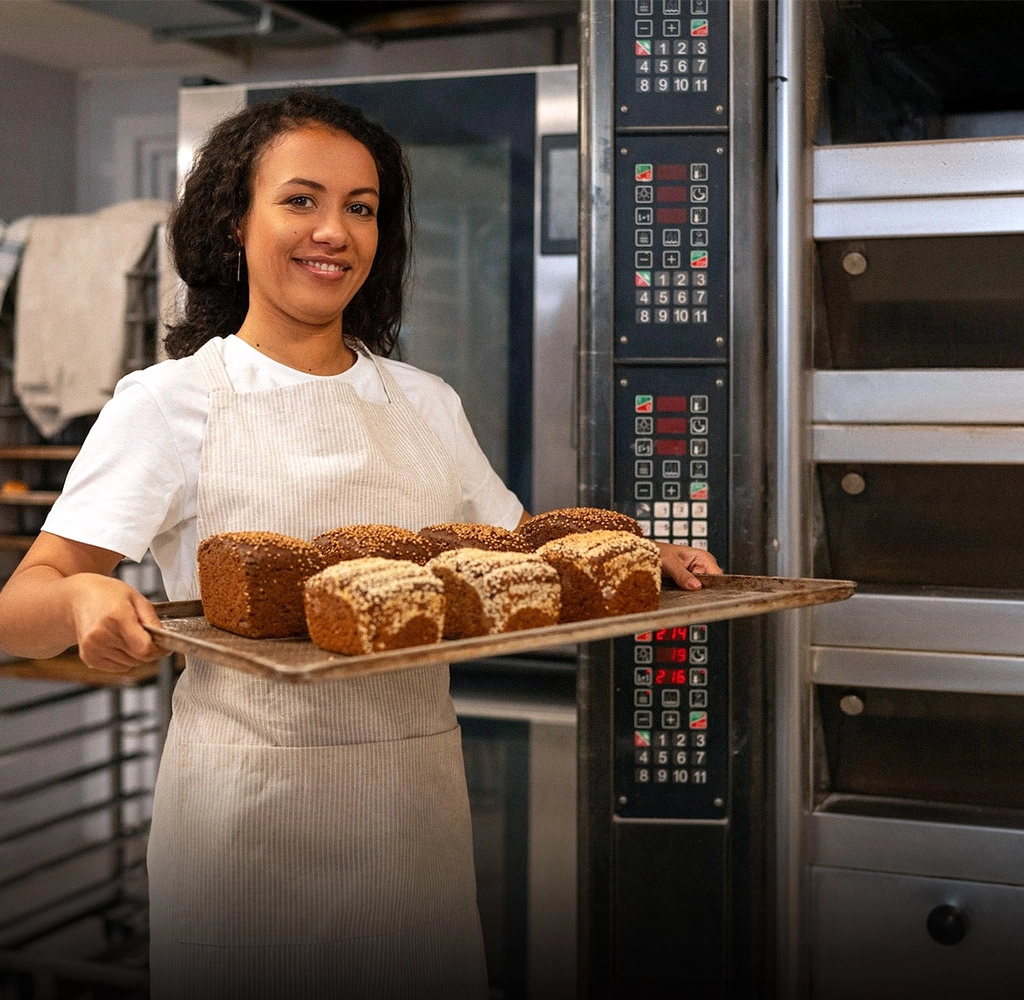
The bakery processing equipment market reached $15.54 billion in 2024 and is projected to hit $25.67 billion by 2032, driven largely by automation adoption. This growth reflects a fundamental shift: bakeries that invest in proper mixing equipment consistently outperform those relying on manual methods.
Consider the math. A commercial planetary mixer handles 20-60 quart batches in 8-12 minutes with consistent results. Manual mixing the same volume takes 25-35 minutes per batch and produces variable outcomes. Over a production day, this compounds into significant time and quality differentials.
Productivity Gains You Can Measure
Modern mixing systems deliver measurable improvements across multiple dimensions. According to industry analysis, bakeries implementing quality mixers typically see:
- 15-20% increase in overall production capacity within 12-18 months
- 40% reduction in labor costs for dough preparation tasks
- Near-elimination of batch-to-batch quality variations
- Decreased ingredient waste through precise mixing controls
One automated mixing case study documented how a facility increased uptime considerably while reducing product loss. The automated batch mixing process optimized mixing speed through streamlined setup and drastically reduced spillage of expensive minor ingredients.
Three Types of Food Mixers and Their Specific Advantages
Planetary Mixers: The Versatile Workhorse
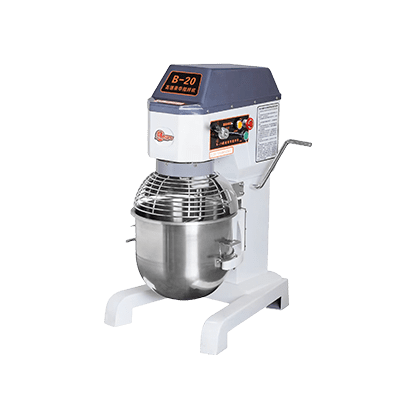
Planetary mixers dominate commercial bakeshops for good reason. The mixing attachment rotates around a stationary bowl in an orbital path, ensuring 360-degree coverage. This design makes them ideal for:
- Cake batters and cookie doughs
- Frostings and icings
- Lighter bread doughs
- Whipped creams and meringues
Small to mid-sized bakeries particularly benefit from planetary mixers’ versatility. A single 20-quart unit with interchangeable attachments (dough hook, flat beater, wire whisk) can handle most product lines. This eliminates the need for multiple specialized machines, saving both capital investment and floor space.
The planetary design excels at incorporating air into batters and thoroughly blending ingredients at varying densities. For bakeries producing an assortment of goods—cookies, cakes, pastries, and occasional bread—planetary mixers offer unmatched flexibility.
Spiral Mixers: Purpose-Built for Bread
Artisan bread bakers consistently choose spiral mixers for their ability to develop gluten structure without overworking dough. The spiral dough hook and bowl rotate in opposite directions, creating gentle kneading action that preserves dough temperature.
Temperature control matters significantly in bread production. Spiral mixers keep dough cooler during mixing compared to planetary designs, critical for proper fermentation and final crumb structure. This makes them essential for:
- Artisan bread production
- High-hydration sourdoughs
- Pizza dough operations
- Bagel production
Spiral mixers can process batches as small as 10% of their maximum capacity while maintaining quality—a feature planetary mixers lack. This flexibility allows bakeries to produce small specialty batches alongside high-volume runs without equipment changes.
The baker mixer market specifically for spiral and planetary models was valued at $4.61 billion in 2024 and is forecast to reach $6.53 billion by 2030, reflecting their central role in modern bakeries.

Horizontal Mixers: Industrial-Scale Production
For bakeries producing massive volumes, horizontal mixers deliver unmatched throughput. These machines can produce the largest volume of dough in the shortest time, making them ideal for production lines.
As dough mixes inside a horizontal mixer, the next batch can be continuously fed into the machine, enabling constant production. However, the friction from continuous mixing generates heat, making these less suitable for temperature-sensitive bread doughs. They excel at:
- High-volume cookie dough production
- Batter mixing for large-scale operations
- Industrial bakery applications
- Situations where speed trumps temperature control
Consistency: The Hidden ROI
Product consistency drives customer loyalty more than any other factor in baking. When customers know they’ll get the same quality every time, they return. Food mixers eliminate the primary source of variation: human inconsistency.
Manual mixing produces different results based on the baker’s technique, fatigue level, and mixing duration. A commercial mixer executes the same process identically every time. The bowl and agitator speeds remain constant, mixing times are programmable, and gluten development proceeds uniformly.
This consistency extends throughout the production chain. When dough quality is uniform, downstream processes become more predictable. Dividing, shaping, proofing, and baking all benefit from consistent input material. After mixing, equipment like a dough sheeter can work more effectively when dough consistency is reliable, as variations in dough firmness can affect sheeting quality and final product appearance.
Modern mixers with programmable cycles and automated ingredient addition further reduce variability. Features like temperature monitoring and mixing time controls ensure every batch meets specifications.
Labor Economics and Operational Efficiency
The labor equation in bakeries has fundamentally changed. A commercial mixer transforms one person’s productivity. Instead of spending 30 minutes manually kneading dough, a baker loads ingredients, starts the mixer, and moves to other tasks. Those recovered minutes compound across shifts and production runs.
Beyond time savings, commercial mixers reduce physical strain. Bread dough kneading demands significant arm and wrist strength. Over time, this repetitive motion causes fatigue and potential injury. Mixers eliminate this physical burden, making bakery work more sustainable and accessible.
For operations experiencing staffing challenges, automation through mixing equipment provides partial solutions. Survey data from the American Bakers Association indicates over 60% of bakery operations are exploring automation to optimize workflows and improve productivity. Quality mixers represent a practical first step in this automation journey.
Space Utilization and Workflow Integration
A properly specified mixer improves bakery workflow beyond just mixing. Consider layout optimization: a fixed bowl mixer should be positioned near flour storage and water supply to minimize material handling. After mixing, dough weight can be considerable, so easy transfer to the preparation bench or automatic divider matters.
When choosing a mixer, industry experts recommend sizing up one level from your immediate needs. Operating at maximum capacity constantly strains components and shortens equipment life. The buffer capacity also accommodates recipe variations, seasonal products, and business growth.
Maintenance and Long-Term Cost Considerations
High-quality commercial mixers can operate efficiently for 20+ years with proper maintenance. This longevity makes them one of the most cost-effective bakery investments. The maintenance requirements are straightforward:
Daily tasks include cleaning bowls, attachments, and guards with food-safe solutions. Weekly checks cover belt tension, gasket wear, and safety features. Monthly maintenance involves deep cleaning and lubrication per manufacturer specifications.
Many bakeries find that financing or leasing arrangements make premium equipment accessible without depleting working capital. The total cost of ownership includes power consumption, maintenance, parts replacement, and downtime. A good commercial mixer investment typically pays for itself through increased efficiency and reduced labor costs within 12-18 months for busy bakeries.
Energy-efficient models offer long-term operational savings. While upfront costs may be higher, reduced power consumption and heat generation lower monthly expenses over the equipment’s lifetime.
Quality Control and Food Safety
Automated mixing improves food safety in several ways. First, it reduces hand contact with ingredients and dough, lowering contamination risks. Second, modern mixers feature sanitary designs with tubular framing, easily removable seals, and IP55 washdown ratings for thorough cleaning.
Consistency in mixing also improves quality control. When every batch follows identical parameters, quality issues become easier to identify and address. If a problem arises, you can rule out mixing variables and focus on ingredients or downstream processes.
Regular inspections and automated quality assurance systems integrated with mixing equipment can detect issues early, reducing waste and ensuring compliance with food safety regulations. This systematic approach to quality management protects your reputation and bottom line.
Scaling Production Without Proportional Cost Increases
Perhaps the most compelling advantage of commercial food mixers is their ability to scale production without proportional cost increases. A case study of a bakery manufacturer showed how upgrading to an automated system enabled small batch production with no downtime for loading, mixing, or cleaning between recipes.
This agility allowed the bakery to expand its product range, offer better flexibility in pack sizes, and significantly enhance quality assurance and customer service—all without proportionally expanding staff or facilities.
The mathematical reality: a $15,000 mixer that enables one person to produce twice as much output generates returns far exceeding its purchase price. When you factor in reduced waste, improved consistency, and expanded production capacity, the ROI becomes clear.
Frequently Asked Questions
How do I determine the right mixer size for my bakery?
Calculate your daily dough production in pounds, then factor in your busiest periods. Match mixer capacity to your peak needs plus 20% buffer. For example, if your busiest day requires 150 pounds of dough across multiple batches, a 60-quart planetary or appropriate spiral mixer would provide adequate capacity without constant maximum-load operation.
Can one mixer handle all my products?
Planetary mixers come closest to universal capability, handling everything from cake batter to medium-weight doughs. However, if bread is your primary product, a spiral mixer delivers superior results. Many successful bakeries use both: a planetary for variety items and a spiral dedicated to bread production.
What’s the actual payback period for a commercial mixer?
Most bakeries see return on investment within 12-18 months through a combination of increased production capacity, reduced labor costs, and decreased waste. Higher-volume operations may achieve payback in 6-9 months. The specific timeline depends on your production volume, labor costs, and current inefficiencies.
How much training do staff need to operate commercial mixers?
Basic operation training typically requires 2-4 hours. However, developing expertise with different dough types, mixing times, and equipment capabilities takes several weeks of regular use. Cross-training employees on mixer operation improves operational flexibility and reduces vulnerability to staffing gaps.
Commercial food mixers represent a fundamental infrastructure investment for serious bakery operations. They deliver measurable improvements in productivity, consistency, and profitability while reducing physical strain on your team. As the bakery equipment market continues its strong growth trajectory, early adopters of automation technology consistently outperform competitors still relying on manual methods.
The question isn’t whether to invest in commercial mixing equipment, but rather which type best fits your specific production needs and growth trajectory.


